

Sino-Greek cooperation in recent years has been a good example of working together to the benefit of both countries in the context of the Belt and Road Initiative (BRI), Chinese, Greek officials, and scholars said.
ATHENS — Sino-Greek cooperation in recent years has been a good example of working together to the benefit of both countries in the context of the Belt and Road Initiative (BRI), Chinese, Greek officials, and scholars said Thursday at a BRI forum held in Piraeus, which hosts Greece’s largest port.
The forum was jointly organized by the Institute of European Studies (IES) at the Chinese Academy of Social Sciences (CASS), the China Public Diplomacy Association, and the Aikaterini Laskaridis Foundation to mark the 10th anniversary of the launching of the BRI and Sino-Greek relations.
The BRI was initiated by China and has “provided opportunities and benefits to the whole world,” Wu Hailong, president of the China Public Diplomacy Association, said at the event.
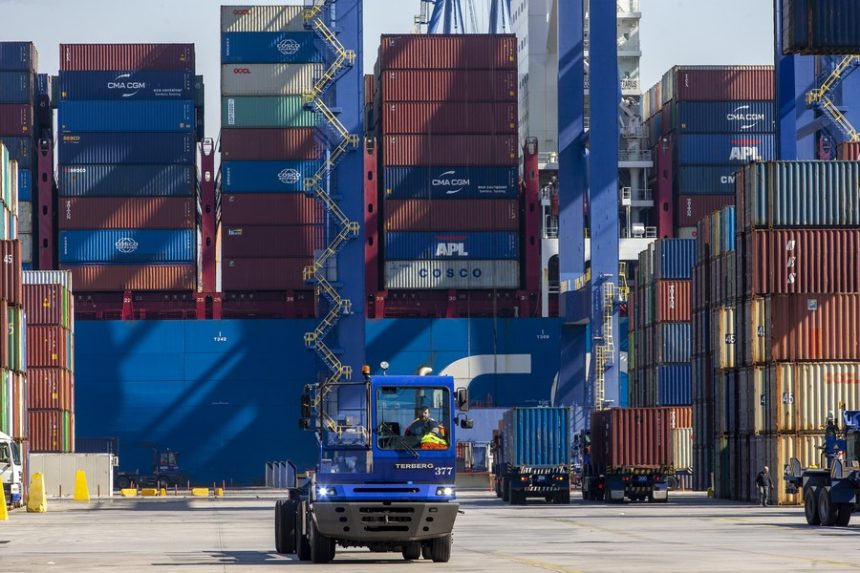
He noted the Piraeus port investment as a good example of a successful joint project.
China’s COSCO Shipping Corporation acquired the majority of Piraeus Port Authority S.A. (PPA)’s shares in an international tender in 2016 and has since done a lot to improve the image of the port, benefiting the local economy.
What divides people is misunderstanding and prejudice, not mountains or seas, Wu said, while discussing multilateralism and globalization.
Chinese Ambassador to Greece Xiao Junzheng said concepts like protectionism and decoupling did nothing to improve the global economy.
China and Greece have been expanding their strategic partnership in many areas, including the economy, trade, education, and culture, and the two sides need to work even closer to expand bilateral cooperation to new sectors, such as the digital economy, renewable energy, and artificial intelligence, he said.
“BRI belongs to the world,” and China and Greece should make more efforts to promote world peace and cooperation, said Feng Zhongping, director of the IES at CASS.
In a challenging and complex international environment, drawing on the wisdom of our ancestors may help leaders find a way to improve global cooperation for the sake of the international community, Athanassios Platias, professor of Strategy at the University of Piraeus, said at the event.
Great powers always compete, but competition must coexist with common interests, he said, citing ancient Greek general and historian Thucydides.
Today, such common interests include the nonproliferation of nuclear weapons, environmental protection, financial stability, and safeguarding public health, he said.
Ioannis Kotoulas, adjunct lecturer of geopolitics at the Universities of Athens, Tbilisi, and Tsinghua, praised BRI’s aim to coordinate the interests of Eurasia.
Regarding Sino-Greek ties, he said that both countries are strong advocates of using soft power and should further explore cooperation in more sectors.