






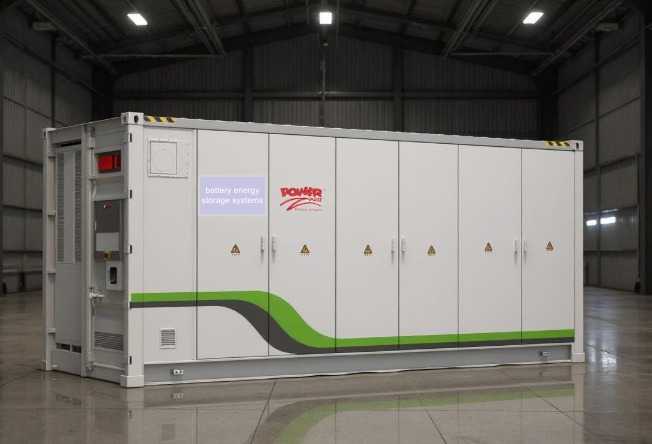
Millions of households, businesses and industries boldly embraced rooftop solar. Now they are importing battery energy storage systems to realize the full gains of their investment.
Pakistanis found themselves in a familiar position earlier this year as loadshedding and power outages partially returned following the US-Iran conflict. The energy crisis that followed the Russia-Ukraine war had already prompted millions of households and businesses to invest in rooftop solar, seeking greater control over their electricity supply and protection from rising energy costs. Now, they are taking the next step. By pairing Battery Energy Storage Systems (BESS) with rooftop solar, consumers are storing their own electricity, reducing their reliance on the grid and gaining even greater control over their energy future.
The first signs of a Battery Boom are already unmistakable. According to a recently published analysis, “From Solar Panels to Storage: Pakistan’s Battery Boom Begins” by Renewables First, cumulative lithium-ion battery storage imports reached 7.6 GWh by the end of 2025. A remarkable 220% year-on-year increase which meant that nearly 60% of all imports recorded to date arrived in a single year.
“What stands out in the data is how compressed this growth has been. BESS imports barely moved between 2018 and 2023, remaining below 0.5 GWh annually. Over the last year demand accelerated dramatically. High electricity prices, a growing base of solar households, falling battery costs and net billing reforms all contributed to the numbers we see today.”
— Huma Naveed, Senior Data Associate, Renewables First
The adoption patterns of this market matter as much as volumes, and they follow the same script as Pakistan’s Solar Rush. Around the world, battery storage is a utility-scale story. In Pakistan, it’s a household one with residential consumers being the single largest driver of demand, making up 58% of all consumer imports. Today, 1 in 26 solarized households have storage installed.
“Pakistan has already lived through one consumer-led energy transition, where households stopped waiting on the grid and rewired the country themselves, with policy steadily catching up alongside them. Batteries are now on the same path, but only faster. The opportunity this time is to move with the market from the start: plan for storage early and lead the next phase together, so that equity and inclusion are built into the design rather than bolted on later.”
— Muhammad Mustafa Amjad, Program Director, Renewables FirstThe next phase of Pakistan’s energy transition will be defined by decentralization, with Consumer Energy Resources (CERs) playing a pivotal role. Geopolitical tensions continue to disrupt global energy markets, drive up imported fuel costs, and expose Pakistan’s vulnerability to external energy shocks. At the same time, changes to the country’s net metering framework reinforce the need to integrate CERs and BESS into national energy planning, strengthening energy security while reducing reliance on imported fossil fuels. For policymakers and institutions, this is an opportunity to align regulation, grid planning, and investment with an energy system that places people, resilience and economic prosperity at its center.
About Renewables First
Renewables First (RF) is a think-and-do-tank for energy and environment. Our work addresses critical energy and natural resource issues with the aim to make energy and climate transitions fair and inclusive.
Learn more about our work: www.renewablesfirst.org
Media Spokesperson – Huma Naveed
Senior Associate – Data Scientist
huma.naveed@renewablesfirst.org
Media Contact – Sana Shahid
Manager Communications
sana.shahid@renewablesfirt.org
+92 344 5288820





