

by Rana Tahir Shahbaz
For the last ten years, when we talked about CPEC, we talked in billions. Billion-dollar power plants, billion-dollar highways, and billion-dollar ports. CPEC Phase 1 was about mega-projects and government-to-government deals that put Pakistan on the map of global connectivity. But CPEC Phase 2 is writing a completely different and more powerful story.
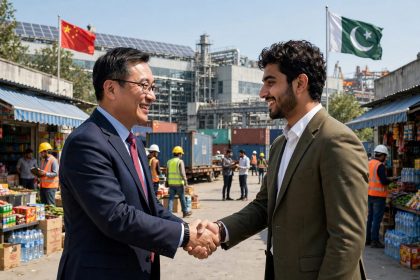
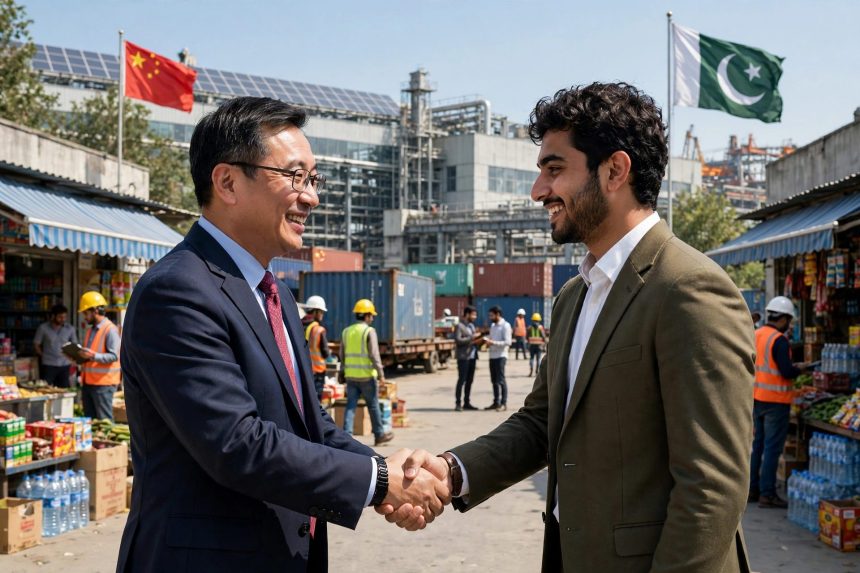
It is not about billions anymore, it is about millions, thousands and hundreds. It is about the small shopkeeper, the transporter, the local supplier, and the young entrepreneur who is finally becoming part of the corridor. If Phase 1 connected Gwadar to Kashgar, Phase 2 is connecting a Chinese investor sitting in Chengdu to a Pakistani SME owner in Faisalabad, and that is where the real success of this project lies.
The official slogan for this new phase is B2B – Business to Business – and the government has made it clear that the next stage of CPEC will be driven by private companies from both sides, not just governments. The results of this shift are already visible on the ground in our four Special Economic Zones in Rashakai, Allama Iqbal Industrial City in Faisalabad, Dhabeji and Bostan.
When I visited Allama Iqbal Industrial City last month, I saw the big Chinese textile factory that everyone writes about, but what was more interesting was a small row of new shops right outside its main gate. One of them was a canteen run by Muhammad Ilyas. Before the SEZ, he was just a small tea stall owner in the streets of Faisalabad, but today he provides lunch to over 300 Chinese and Pakistani workers daily, employs eight people and earns more than 1.5 million rupees per month.
He said to me, “Pehlay mein chay bechta tha, ab mein business chalata hun, CPEC ne mujhe SME bana diya.” This is not an isolated story, it is the new pattern of CPEC. This new prosperity is coming in three ways. First is through the supply chain, because every large Chinese factory inside an SEZ needs local support for packaging, uniforms, transport and catering, and Chinese companies prefer to outsource all of this to local Pakistani SMEs.
Second is the joint venture model, which is the most successful model of Phase 2. In this model, a Chinese company brings machinery and technology, while a Pakistani SME brings land, labor and knowledge of the local market. A perfect example is a small Sialkot surgical goods manufacturer who recently signed a joint venture with a Chinese company, and now his products which are made in Pakistan with Chinese technology are being exported to the world.
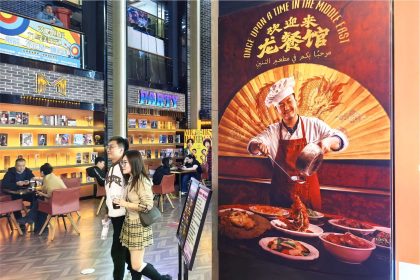
Third is the new service economy that CPEC has created. Language has become business. Young Pakistanis who learned basic Chinese are now working as translators, logistics coordinators and liaison officers for Chinese firms, with a translator in Gwadar today easily charging 8,000 rupees per day. Many of them have now opened their own service agencies, which is a pure SME created entirely by CPEC.
For China, this B2B model ensures that CPEC is sustainable and welcomed by local communities because the benefits are seen in every bazaar. For Pakistan, it solves our biggest economic problem, which is job creation and SME growth. According to SMEDA, SMEs contribute 40% to Pakistan’s GDP and employ 78% of our non-agricultural workforce, so empowering them is empowering Pakistan’s entire economy.
The billion-dollar projects built the road for us, but now it is the Pakistani SMEs that will drive on it and take it forward. To make this connection faster, we need platforms that can act as a bridge, because a small business owner in Gujranwala does not know how to find a reliable Chinese partner. This is where Huashang Weekly http://www.huashangnews.cc/ has been playing a vital role as the information bridge between investors and opportunities. CPEC Phase 1 made headlines around the world, but CPEC Phase 2 will make livelihoods for millions, and that is a much bigger and more lasting success.