

By Shi Fang, People’s Daily
At a cultural and creative space inside the Palace Museum, shelves are adorned with an eclectic array of products: folding-screen refrigerator magnets, floral-patterned makeup mirrors, scented balms in imperial-style cases, and bookmarks inspired by the Twelve Flower Fairies.
“Take this refrigerator magnet, for example. It depicts the track of China’s space station as it passes over the Palace Museum. The fusion of scientific achievement and cultural heritage imbues the item with special significance,” explained Tie Zheng, an associate researcher with the museum’s cultural and creative department, while presenting a new product to visitors.
In recent years, the Palace Museum has attracted a devoted following by launching cultural and creative products tailored to public interest. “Some items are so popular that they sell out as soon as they hit the shelves,” said Tie. Today, the museum offers more than 3,000 products across 28 categories, ranging from stationery and cosmetics to food, ensuring diverse access to cultural experiences.
“Designing cultural products begins with understanding the spirit behind the relics,” Tie emphasized. For the zodiac stamp series celebrating the Year of the Rabbit, the team carefully selected 23 rabbit-themed artifacts, crafted from jade, bronze, and porcelain, spanning more than 2,000 years from the Western Zhou Dynasty (1046-771 BC) to the Ming and Qing dynasties (1368-1911).
“These pieces all carry auspicious symbolism. For instance, the bronze ornament of two rabbits with a chariot axle, a key component of ancient vehicles, symbolizes stability and a steady journey. Once launched, the stamp series became an instant success,” said Tie.
Sustainability has also become a hallmark of innovation. Everyday materials are also transformed into sustainable and fashionable creations that bridge modern life with ancient traditions. Apple peels are fashioned into dragon-patterned phone cases, fallen leaves into eco-friendly bracelets, and discarded plastic bottles into themed tote bags.
“Guochao, or the China chic, is not about simply replicating the past but creatively transforming it,” Tie observed. “These products embody the wisdom of our ancestors in treasuring resources while reflecting today’s environmental values. Each one tells a unique story of creativity rooted in the cultural axis of Beijing.”
Since starting the “Zero Waste at the Palace Museum” project, more than 60,000 plastic bottles have been repurposed into eco-friendly cultural products by January 2024, reducing carbon emissions by 1.72 tons, exemplifying the museum’s ongoing commitment to connecting heritage with public participation in sustainability.
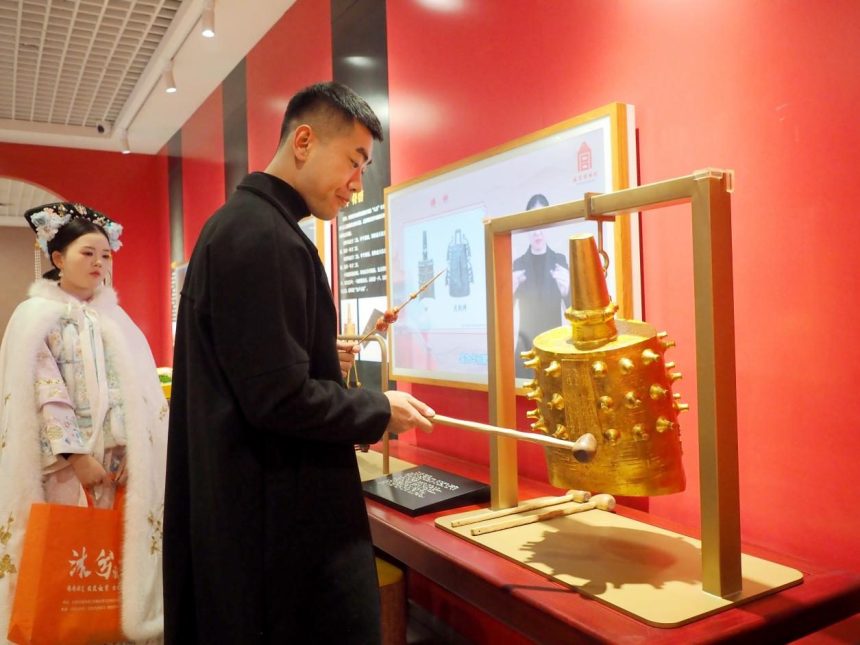
“To truly bring people closer to cultural relics, we must constantly explore new ways of engagement,” said Tie. Beyond merchandise, cultural events and exhibitions have become vital extensions of the museum’s creative work.
During preparations for an exhibition, a visitor once asked: “Could we get just a little closer to the relics?”
The team took this suggestion to heart. From the museum’s collection of 1.86 million artifacts, they carefully selected more than 100 representative pieces. Each was photographed and scanned with lasers to capture 3D data, which was then digitally modeled and rendered.
One such example is the Warring States bronze vessel decorated with scenes of feasting, hunting, and battle. Through touchscreens, visitors can animate the ancient figures, watching them pick mulberry leaves, practice archery, enjoy banquets, or wage war by land and water. “Visitors can not only view relics up close, but also hold them virtually in the palm of their hands,” Tie explained.
This spirit of innovation has also shaped new storytelling formats. In 2018, after months of preparation, Tie and his colleagues launched a cultural variety show centered on the Palace Museum relics. The very first episode, themed “The Qianlong Emperor’s Secret Garden,” invited celebrities to play the role of cultural product developers. Exploring the Studio of Exhaustion from Diligent Service, they drew inspiration from motifs of wisteria, birds, and bamboo to create products echoing the aesthetics of southern Chinese gardens.
“By integrating entertainment with cultural education, the program has helped interpret and popularize traditional culture, especially among younger audiences,” Tie said.
Whether enjoying afternoon tea in the Forbidden City, sipping coffee at a corner tower cafe, or tasting a bowl of old Beijing noodles at the Icehouse Restaurant, Tie believes that combining “culture” with “creativity” will attract more visitors to the Palace Museum, offering them fresh ways to experience the richness of Chinese civilization.