


By He Yin, People’s Daily
As the global economy wades through uncertainty and sluggish recovery, China is projecting a rare image: stability. With a combination of pro-business policies, a steadily improving business environment, and long-term social stability, the country continues to offer a fertile ground for foreign investors seeking development in the long run.
In a world where access to large, integrated market has become an increasingly scarce commodity, China stands apart. The nation’s sheer demographic weight – over 1.4 billion people, including more than 400 million middle-income earners – offers multinationals an unmatched consumer base. With 180 million business entities and a unified national market, it remains the world’s most promising arenas for consumption upgrades, providing a “golden track” for foreign investors to gain a competitive edge.
That promise was on full display during this year’s Spring Festival holiday. Sales of key retail and catering enterprises climbed 4.1 percent year on year, while domestic tourism jumped 5.9 percent. From bustling cinemas to booming demand for ice and snow tourism, cultural travel, and trade-in programs, Chinese consumers are spending with renewed confidence.
To further stoke this momentum, China has released a new plan on special initiatives to boost consumption. The plan is composed of 30 policies across eight sections, aimed at encouraging consumption, upgrading economic structure, and driving high-quality development.
As Hamid R. Moghadam, chairman and CEO of Prologis, noted, the rising demand from Chinese consumers represents a tremendous growth opportunity that continues to drive his company’s expansion in the country.
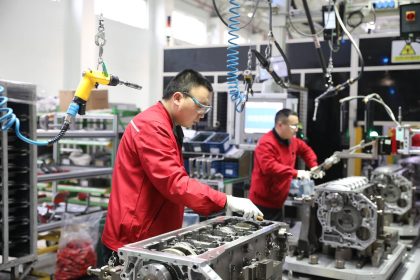
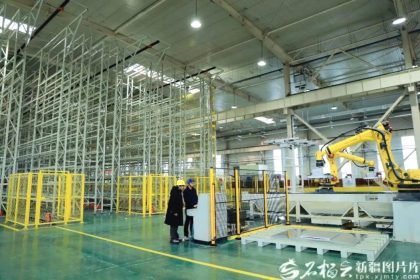
But China’s appeal is not solely about its market size. At the heart of its high-quality development lies a commitment to innovation – a powerful engine for foreign enterprises looking to deepen their presence. With a commitment to high-quality development, China is accelerating green, digital and smart transformation, which, coupled with the country’s sophisticated industrial ecosystem, provides the best testing ground for the latest outcomes of technological revolution and industrial upgrading.
Recent high-profile events have put this innovation agenda in the spotlight. The Boao Forum for Asia Annual Conference 2025 was held under carbon-neutral protocols, while the 2025 Zhongguancun Forum showcased a range of cutting-edge technologies, including heavy-lift coaxial twin-rotor unmanned helicopters and optical quantum computers.
Global observers now routinely recognize the country as a hub for innovation, applauding its investments in artificial intelligence, advanced manufacturing, and new consumption models. Increasingly, multinationals are establishing R&D centers and innovation hubs across the country, drawn by a unique convergence of technology, talent, and market advantages – an ecosystem that facilitates mutual success.
That confidence is translating into concrete commitments. America’s Federal Express Corporation (FedEx) is building an intercontinental transfer hub in Shanghai. Siemens Heaththineers, a German health technology company, has broken ground on a new manufacturing and research facility to produce high-end medical equipment in Shenzhen, south China’s Guangdong province. British pharmaceutical giant AstraZeneca has announced a $2.5 billion investment to establish a global strategic R&D center in Beijing, its sixth worldwide.
These moves reflect a broader trend captured in recent business sentiment surveys. According to the 2025 China Business Climate Survey Report released by the American Chamber of Commerce in China, nearly 70 percent of surveyed U.S. consumer firms plan to increase their investments in China this year.
The Business Confidence Survey Report for 2024/25 released by the German Chamber of Commerce in China revealed that 92 percent of German firms intend to continue their operations in the country, while 51 percent plan to boost their investment in the next two years.
Statistics from China’s Ministry of Commerce show that in January alone, foreign investments from the United Kingdom, South Korea, and the Netherlands in China surged by 324 percent, 104 percent, and 76 percent, respectively.
Even as geopolitical tensions and economic headwinds cloud global forecasts, the prevailing consensus among investors is that China still matters – and increasingly so. Its vast market, resilient economy, and enduring vitality continue to attract foreign capital and long-term commitment.
In the eyes of many international executives, China is more than an investment destination; it is a strategic partner in future growth. As the country deepens its commitment to openness, innovation, and global cooperation, it is cultivating not only stability but the promise of shared prosperity – a fertile ground poised to yield even greater returns for global enterprises.