




Rana Irfan Rafi

Climate change is a very serious global issue effecting agriculture and food security. Rising temperatures, unpredictable weather, and increasing sea level are causing problems for farmers. In many countries, including Pakistan, floods are becoming more common, destroying crops and making it difficult for the farmers to cultivate enough crops, which is effecting the food crisis. Floods have a significant impact on agriculture each year. Estimates from recent years provide a general sense of the scale of the damage to crops, In the 2010 flood in Pakistan, approximately 2 million hectares (about 5 million acres) of crop around the country were affected, and the 2022 flood had a severe impact on as well. In the 2022 flood destroyed 1.5 million hectares (about 3.7 million acres) of crops. Both times the flooding affected major areas such as Sindh and Punjab, which are the key agriculture regions for the country. To address this challenge, we need to think about how we can save the crops and how we can grow the crops even in the flood. There is a very innovative solution that has never been addressed and never discussed as well. The development of floating farms. Farmers are designed to grow food on the water, making them more resilient to climate change. I would like to explore how the floating farms will be worked on and built and why they could be a great option like Pakistan to ensure food security and sustainability.
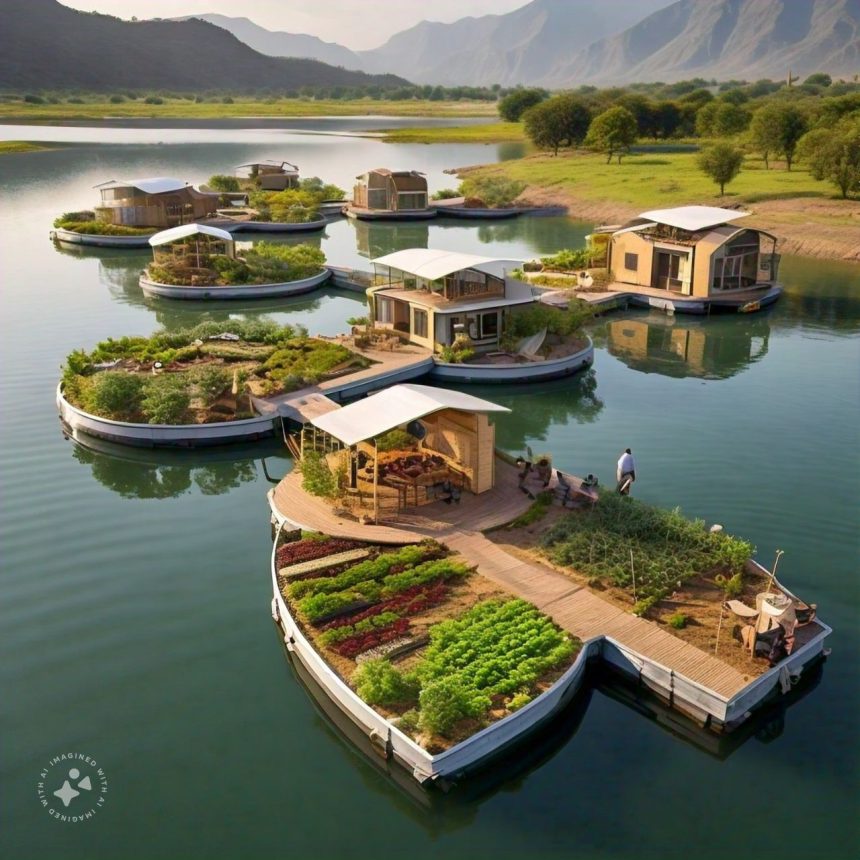
Pakistan, with its numerous lakes, rivers, ponds, and extensive coastal areas, is well-suited for floating farms. These farms are platforms that float on water bodies and allow for growing crops and raising livestock. The main idea behind floating farms is to create a stable farming environment that remains unaffected by floods or droughts. This method can be used to cultivate vegetables, fruits, and herbs.
Floating farms must be designed to be simple and effective. They can be built by light-weight martial, which can float on the water. These float farms can be covered with soil or other growing mediums where crops are planted. Floating farms use hydroponic systems, which allow plants to grow without soil by using nutrients-rich water instead. These farms can also collect rainwater to water the crops, making them even more sustainable. Floating farms can include fish tanks for raising fish. This integrated approach is known as aquaponics. In an aquaponics system, the waste produced by the fish provides nutrients for the plants. In return, the plants help clean and filter the water, making it healthier for the fish. By combining plant cultivation and fish farming, floating farms maximize the use of space and resources. Floating farms assist to preserve water in numerous ways. Because they will be located on water bodies, they will produce a cooler atmosphere that slows the rate of evaporation. Floating farms also include rainwater collection systems that collect and store rainfall, ensuring a stable water supply during dry seasons and lowering dependency on outside sources. Furthermore, the floating farms will provide shade over the water, lowering its temperature and reducing evaporation, making floating farms a viable choice for water conservation during the hot summer months. Floating farms are also more resilient to climate change. Flooding is a common problem that can destroy traditional farms by submerging crops. However, floating farms can rise and fall with the water levels, preventing crops from being submerged and damaged. Additionally, during droughts, floating farms can continue to grow crops because they efficiently use available water. This makes them a valuable resource for ensuring a steady food supply even when water is scarce.
Floating farms are especially important in urban areas where there is no land available for traditional farming. Most vegetables in cities come from distant rural areas, which increases transportation costs and has a definite effect on inflation. By using water bodies for farming, floating farms offer an alternative space for growing food.
One potential area for floating farms in Pakistan is the Indus River Basin, and coastal areas which is already a major agricultural region. By introducing floating farms along the river and its tributaries, farmers can protect their crops from flooding while still taking advantage of the rich water resources.
With its benefits, there are also challenges to consider. One of the main challenges is the initial cost of setting up a floating farm. Another challenge is the maintenance of floating farms. governments and non-governmental organizations (NGOs) can help by providing funding and technical support.
The concept of floating farms is still relatively new, but it has great potential for the future. As technology improves, floating farms could become even more efficient and easier to set up. For example, solar panels could be installed on floating farms to provide a source of renewable energy. Advanced water filtration systems could also be developed to ensure that the water used in floating farms is clean and safe.
Universities, research institutions, and private companies can play a role in developing new technologies and methods for floating farming. By investing in research organizations, Pakistan can become a leader in this innovative field, not only solving its own food security challenges but also providing solutions that could be adopted by other countries facing similar issues.
The author is associated with SDPI (Sustainable Development Policy Institute) and can be contacted at irfanrafi@sdpi.org tweeter@ranaskt11
Innovative Floating Farms: The Future of Sustainable Agriculture in Pakistan
Leave a comment