


By using this site, you agree to the Privacy Policy and Terms of Use.
Accept
China ObserverChina Observer
Notification
Latest News
The Millennium Education Celebrates Excellence & Legacy at Prestigious Service Awards
April 6, 2026
From Awareness to Action: Building an Inclusive Future for Autism in Pakistan
April 3, 2026
Yiwu home to more than 10,000 foreign-funded business entities
March 29, 2026
China planning human research program at space station
March 28, 2026
China’s narrative of economic resilience, technological advancement takes center stage at Boao Forum
March 28, 2026
Aa
  • Home
  • Pakistan
  • China
  • Sports
  • World
  • Business
  • Technology
  • Entertainment
  • Tourism
  • Videos
  • Health
  • More
    • Articles
    • Currency Rates
    • Gold Rates
    • Daily Horoscope
Reading: Wearing traditional Chinese clothing while visiting scenic spots becomes a hit with young people
Share
Aa
China ObserverChina Observer
  • Home
  • Pakistan
  • China
  • Sports
  • World
  • Business
  • Technology
  • Entertainment
  • Tourism
  • Videos
  • Health
  • More
Search
  • Home
  • Pakistan
  • China
  • Sports
  • World
  • Business
  • Technology
  • Entertainment
  • Tourism
  • Videos
  • Health
  • More
    • Articles
    • Currency Rates
    • Gold Rates
    • Daily Horoscope
Have an existing account? Sign In
Follow US
China Observer > Blog > China > Wearing traditional Chinese clothing while visiting scenic spots becomes a hit with young people
ChinaEntertainment

Wearing traditional Chinese clothing while visiting scenic spots becomes a hit with young people

March 27, 2024 4 Min Read
Updated 27/03/24 at 8:30 PM
Share
4 Min Read
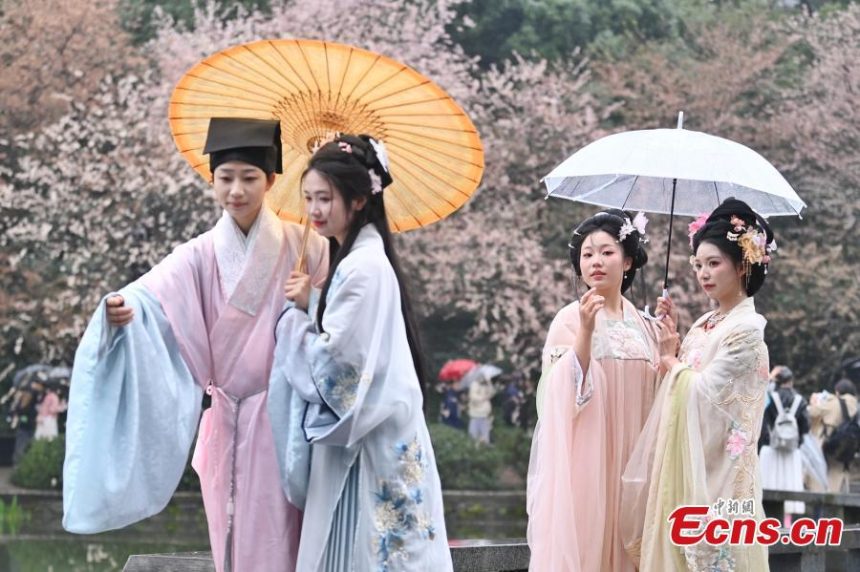
Visitors in Hanfu (a traditional Chinese costume) pose for a photo amid cherry blossoms at the Wangyue park in Changsha, central China's Hunan Province, March 17, 2024. (Photo: China News Service/Yang Huafeng)

(People’s Daily Online)
Wearing traditional Chinese clothing while visiting scenic spots has become a popular activity among young people in China in recent years.

Passengers dressed in traditional Chinese attire could ride the subway for free for about one week in Suzhou city, east China’s Jiangsu Province during this year’s Spring Festival holiday. As a result, the horse-faced skirt, or mamianqun in Chinese, which is a type of Hanfu, a style of clothing traditionally worn by the Han people, became a hit among young people during the holiday.

Zhao Xi (pseudonym) is a 27-year-old Hanfu enthusiast. Dressed in traditional Chinese attire, she traveled to Chengdu, capital of southwest China’s Sichuan Province last year. She found that young people clad in traditional Chinese clothing were everywhere in tourist attractions, including the Chengdu Wuhou Shrine.

“People used to think that wearing traditional Chinese clothing while walking down a street was strange. But now, people are getting used to seeing passers-by in traditional attire,” Zhao said.

“People born in the 1990s and 2000s like to wear traditional clothing when traveling because they have realized that their cultural identity is related to Hanfu and it has become a fashion,” said Pan Lusheng, chairman of the Chinese Folk Literature and Art Association.

“It is a spontaneous trend and demonstrates the resurgence of traditional culture,” Pan added.

Chen Chen from central China’s Hunan Province has collected many traditional Chinese outfits in various styles. She selects different traditional clothes according to the scenery of the scenic spots for each trip.

When buying traditional attire, Chen also pays attention to the embroidery patterns and their cultural value, in addition to color matching and style.

Wearing traditional attire is not just for taking pretty pictures, but also for gaining a deeper understanding of the cultural connotation behind the clothing and the feeling of ancient Chinese poems and essays in an immersive way, Chen said.

Bi Hong is an embroidery artist and a master of arts and crafts in Beijing who has been dedicated to traditional clothing research, protection and innovative development for nearly 28 years.

Bi’s studio houses an old camphor wood box full of court costumes and embroidery works from the Qing Dynasty (1644-1911) that she has meticulously collected for over more than 20 years. She knows all about the year, materials, and color matching of each piece of her collected works, as well as the symbolic meaning behind the embroidery patterns.

From Bi’s perspective, traditional Chinese attire reflects the unique cultural background, aesthetics and exquisite craftsmanship of her ancestors.

The embroidery patterns on the traditional clothes hide the words of people from ancient times. For example, the chrysanthemum pattern implies a long life and a peaceful residence.

Traditional Chinese clothing is an integral part of China’s excellent traditional culture, Bi said.

“Since ancient times, China has been a nation whose people value etiquette highly and a country known for its attire. Clothing records the evolution of aesthetic characteristics across different historical periods and is one of the manifestations of Chinese civilization and etiquette,” Bi added.

Bi believes that the popularity of traditional Chinese costumes will continue to grow. Additionally, she hopes that more enthusiasts will devote themselves to the protection, inheritance and innovative development of traditional Chinese attire through learning, research and practice.


You Might Also Like

Yiwu home to more than 10,000 foreign-funded business entities

China planning human research program at space station

China’s narrative of economic resilience, technological advancement takes center stage at Boao Forum

Chinese smart technologies shine at 2026 Mobile World Congress

A day in the life of China’s economy

admin March 27, 2024
Share this Article
Facebook Twitter Whatsapp Whatsapp LinkedIn Email Print
Leave a comment

Leave a Reply Cancel reply

You must be logged in to post a comment.

Follow US

Find US on Social Medias
Facebook Like
Twitter Follow
Instagram Follow
Youtube Subscribe
Corporate

The Millennium Education Celebrates Excellence & Legacy at Prestigious Service Awards

Corporate

From Awareness to Action: Building an Inclusive Future for Autism in Pakistan

China

Yiwu home to more than 10,000 foreign-funded business entities

ChinaTechnology

China planning human research program at space station

China

China’s narrative of economic resilience, technological advancement takes center stage at Boao Forum

You Might Also Like

China

Yiwu home to more than 10,000 foreign-funded business entities

March 29, 2026
ChinaTechnology

China planning human research program at space station

March 28, 2026
China

China’s narrative of economic resilience, technological advancement takes center stage at Boao Forum

March 28, 2026
China

Chinese smart technologies shine at 2026 Mobile World Congress

March 16, 2026
logo-chinaoberver-tranparent-small

About US

We influence 20 million users and is the number one business and technology news network on the planet.
  • Contact
  • Blog
  • Complaint
  • Advertise
Menu
  • Contact
  • Blog
  • Complaint
  • Advertise

Market Performers

Subscribe US

Weather Widgets for Websites

©China observer. All Rights Reserved.

Removed from reading list

Undo
Welcome Back!

Sign in to your account

Lost your password?