


By Luo Shanshan, Wang Pei, People’s Daily
As global supply chains undergo a new round of restructuring, China is emerging as an increasingly attractive destination for foreign investment. A recent report from the Chinese Academy of International Trade and Economic Cooperation under the Ministry of Commerce highlighted how the country’s comprehensive, multi-dimensional strategic advantages and expanding market potential are reinforcing its appeal to multinational corporations.
The convergence of diverse opportunities is enabling the Chinese market to deliver greater long-term value, fostering both sustained capital appreciation and enhanced global competitiveness. As of the end of 2024, foreign investors had invested and established more than 1.23 million enterprises, with a cumulative actual utilization of foreign capital of 20.6 trillion yuan ($2.87 trillion).
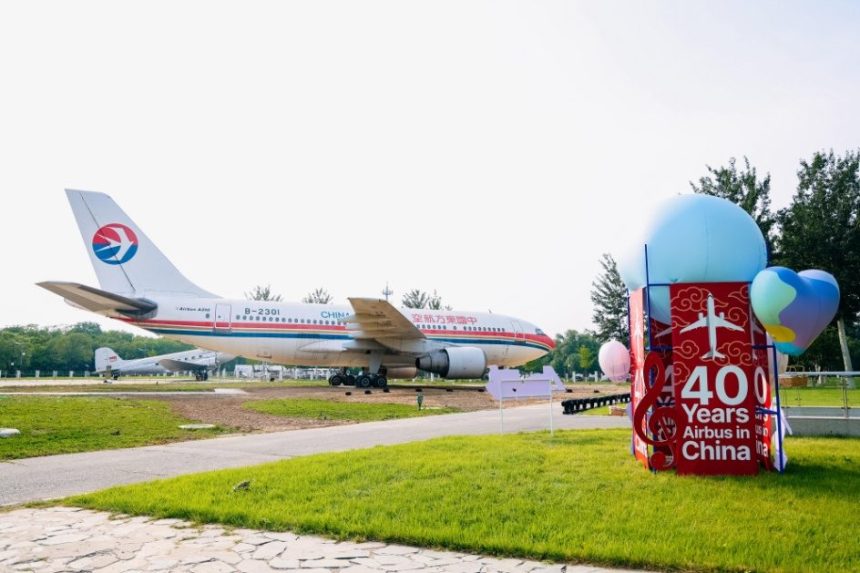
On June 25, Airbus marked four decades of partnership with China. Over the years, China has become Airbus’ biggest single-country market for commercial aircraft. Today, the partnership spans the entire aircraft lifecycle – from design and manufacturing to operational support and recycling after retirement. According to Airbus’ 2025 global market forecast, China will become the world’s largest air transport market in the next 20 years, requiring 9,570 new aircraft, accounting for nearly one-fourth of total demand globally.
On June 18, German electric giant Phoenix Contact, another multinational with a long-standing presence in China, broke ground on a mega-factory in Nanjing, east China’s Jiangsu province, with a total investment of 1 billion yuan. Once completed, the facility will triple its production capacity within five years.
A company representative noted that China’s market scale and sophistication provides significant growth potential, while the rapid advancement of sectors like new energy and intelligent manufacturing aligns closely with the company’s business focus.
Han Jian, a professor at Nanjing University’s business school, observed that on the demand side, China’s large and multi-tiered market presents abundant commercial opportunities for foreign businesses. On the supply side, the country boasts a complete industrial system and strong manufacturing capabilities, having built the world’s largest high-speed railway and expressway networks, as well as world-class port clusters and highly efficient logistics systems. This helps multinationals lower costs and enhance operational efficiency, Han noted.
A stable policy framework and an increasingly open environment further strengthen China’s investment profile.
This confidence is reflected in multinationals’ consistent investment patterns, exemplified by German consumer goods leader Henkel: the company allocated over 500 million yuan in setting up an innovation center in Shanghai in 2021, launched a new adhesive manufacturing facility in the Yantai Huang-Bohai New Area in east China’s Shandong province in 2023, and inaugurated its Cosmetics Brands China Factory in Taicang, Jiangsu province, in March this year.
“The current wave of investment is driven by market dynamics, strong government support, and continuous improvements in the business environment,” said Yu Jiang, head of government relations and public affairs at Henkel (China).
“The Chinese government has been actively advancing opening-up. The negative list for foreign investment is getting shorter every year, and in 2024, restrictions in the manufacturing sector were completely lifted. A range of new policies have also been introduced to attract foreign investment,” said Yu.
Experts affirm that China’s long-standing political and social stability, combined with consistent policy implementation, cultivates a reliable and predictable operating climate for foreign businesses. Notably, China’s well-structured approach to both voluntary and unilateral opening-up has created a forward-looking and flexible space for multinational development.
Many foreign companies have highlighted China’s dynamic application scenarios and innovation momentum as key reasons for choosing the country as a launchpad for new business models and launching cutting-edge technologies. Today, China boasts the world’s largest innovation ecosystem for scenario-based applications.
After 38 years of development in the Chinese market, Schneider Electric, a global leader in energy management and industrial automation, has made China its second-largest market globally and one of its most critical supply chain bases.
According to Yin Zheng, executive vice president of China and East Asia Operations at Schneider Electric, the company has established five research and development (R&D) facilities in cities such as Beijing and Shanghai. Since 2019, its R&D spending in China has grown at a compound annual rate of more than 18 percent.
Japanese electronics maker Seiko Epson Corp has followed a similar strategy, combining technological expertise with localization. “Through open collaboration, we’ve developed a wide range of popular, China-specific solutions,” said the president of Epson (China) Co., Ltd.. “In response to the emerging challenges of the AI era, we are actively integrating into China’s development trajectory and innovation ecosystem.”
According to the report released by the Chinese Academy of International Trade and Economic Cooperation, foreign-invested enterprises have been rapidly expanding their R&D presence in China in recent years. As of May 2025, Shanghai was home to 603 foreign-funded R&D centers. In 2024 alone, Beijing approved more than 110 new foreign-funded R&D centers, bringing the city’s total to 221 – more than doubling within just a short span of time.