



By Liu Wenxin, People’s Daily, Sun Bing, Xie Wei, China Economic Weekly
A single launch vehicle contains hundreds of thousands of components. Historically, compiling a complete set of quality documentation for an entire rocket requires quality engineers and process technicians to shuttle back and forth between vast quantities of paper records and fragmented information systems — a process that typically takes about a week.

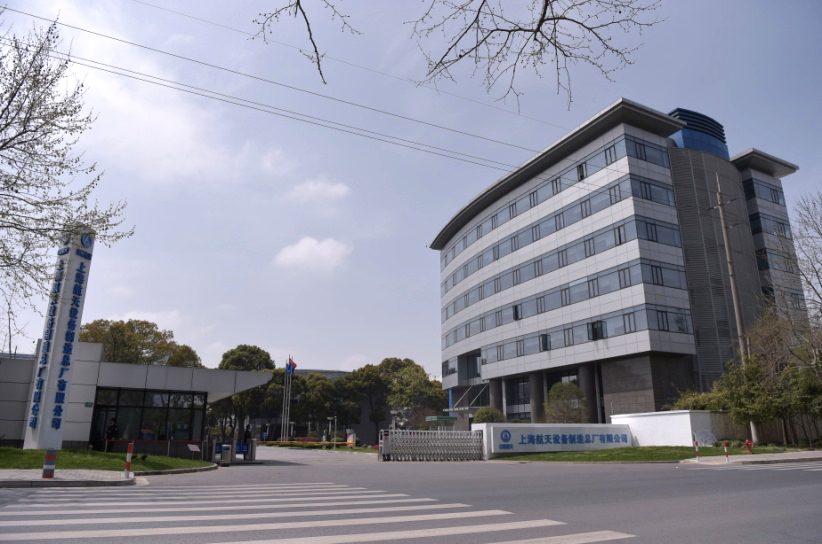
At the smart factory of Shanghai Aerospace Equipments Manufacturer (SAEM), however, that same task now takes just five minutes.
With a few clicks, staff can trace every data point back to its source — from raw material testing and component machining to subassembly, final assembly, and full-vehicle testing.
This dramatic increase in speed stems from a fundamental transformation of the production model.
Here, every product — whether a complete launch vehicle or a single screw — is assigned a unique digital identity that follows it throughout its entire lifecycle.
Data including raw material composition analysis ,heat-treatment temperature curves, real-time torque data from every tightening tool used during assembly, as well as all test records for each section, are automatically aggregated and dynamically linked to form a full-lifecycle quality data package that accompanies the product from start to finish.
“When we deliver a product, we must also deliver its complete data package,” said Cheng Hui, a researcher at SAEM.
He explained that if a quality fluctuation is detected in a batch of materials, an integrated quality traceability system, enhanced by AI, can pinpoint the exact affected parts from tens of thousands of components. It can also determine their status — whether in storage, production, or already installed on a specific rocket. “What was once a needle-in-a-haystack search through paper files is now resolved in seconds,” Cheng added.
Recently, China’s Ministry of Industry and Information Technology (MIIT) unveiled the inaugural list of 15 flagship smart factories, with SAEM among them. These flagship facilities are considered to represent the pinnacle of intelligent manufacturing, both in China and globally. Fostering such model factories is a strategic initiative by China to capitalize on opportunities in industrial intelligence and build a competitive edge for the future of manufacturing.
According to Ao Li, deputy head of China Academy of Information and Communications Technology (CAICT), the application of artificial intelligence technology was heavily weighted in the selection criteria for the first batch of flagship smart factories.
Statistics indicate that among the 15 selected factories, the average penetration rate of AI applications exceeds 70 percent, with more than 6,000 AI models in use and over 1,700 key pieces of intelligent manufacturing equipment and industrial software solutions achieving practical breakthroughs.
In the rocket final-assembly area, two rocket stages weighing dozens of tons were being joined together. The workshop lacked the noise typically associated with heavy industry; instead, the space was filled with the soft hum of electric motors.
An integrated one-stop flexible automatic docking system, incorporating large-scale spatial pose measurement technology, enables the equipment to “see” and “feel.” It can automatically capture position data, sense force conditions, adjust posture in real time, and seamlessly align multi-ton modules—marking a complete departure from the traditional approach that relied on verbal coordination, visual estimation, and manual adjustment.
Behind this transformation lies the factory’s decision to move complex systems engineering into the digital realm.
In this intelligent factory, critical and complex processes are first simulated and validated in a virtual environment before being executed on physical equipment, which significantly reduces rework and shortens production cycles.
Leveraging the accumulated image data, the company has developed defect detection systems based on artificial neural networks, which enables the automated identification of assembly quality issues in rockets and solar arrays. Virtual reality technology has also been introduced into assembly procedures, allowing three-dimensional stitching of localized and layered assembly images—addressing challenges such as accurately reflecting pipeline routing and installation sequences that traditional photos cannot capture. Across SAEM, AI application continues to deepen.
“The deep integration of AI with advanced manufacturing technologies now extends beyond typical scenarios such as production scheduling and online inspection,” Ao noted.
“It is expanding into higher-value segments of the industrial chain, including research and development, design, and operations and maintenance services. This integration is giving rise to a new generation of industrial intelligent agents capable of perception, decision-making, and execution, accelerating the evolution of intelligent manufacturing from automation toward autonomy.”
At the same time, SAEM is extending its “intelligent” capabilities throughout the entire industrial chain.
For instance, aerospace manufacturing extensively involves extreme processing techniques and requirements for performance in extreme environments. Through close, collaborative development with domestic equipment suppliers, SEAM translates process needs directly into equipment parameters. This collaboration has enabled the joint breakthrough in key equipment such as friction stir welding systems, automated flexible final assembly platforms, and high-precision mirror milling machines.
Through the development of its smart factory, SAEM has achieved a localization rate of over 80 percent for intelligent manufacturing equipment and increased production efficiency by 40 percent.