



By Zhao Juecheng, Fan Lingzhi, Global Times; Zhang Bolan, Xian Gan, People’s Daily
A 17-hour flight from Athens, Greece, to Lhasa in China‘s Xizang autonomous region- including a layover in Beijing – bridges five time zones. This journey from the Aegean Sea to the Qinghai-Xizang Plateau spans a distance once unimaginable to ancient travelers.
Yet at the Shannan Museum in southern Xizang, a single artifact illuminates the miraculous connections between Eastern and Western civilizations. This item, a gilded silver plate dating back to the 6th or 7th century adorned with the figure of Dionysus, the god of wine in ancient Greek mythology, whispers tales of early exchanges between Chinese and Greek civilizations.
Shannan (meaning “south of the Gangdise Mountains”) is recognized as Xizang’s cultural heartland, home to many of the region’s “firsts”: the earliest monastery, the first Buddhist chapel, the earliest scriptures.
Before Tibetan King Songtsen Gampo established the Tubo regime in Lhasa, generations of Tibetan rulers governed from the Yarlung River valley in Shannan, the cradle of Tibetan civilization.
Drawing on its profound history, Shannan established Xizang’s first museum in 1995. Among its treasures, alongside the Dionysus plate, a Sasanian Empire (AD 224-651) silver coin draws particular interest.
According to Drolma, head of the Shannan Museum, the Sasanian Empire, centered in ancient Persia (modern-day Iran), sat at a critical juncture along the ancient Silk Road, connecting Asia and Europe. The discovery of silver coins in Shannan, she explains, underscores the region’s long-standing – directly or indirectly – connections to Central Asia via what scholars today call the “Plateau Silk Road.”
These exhibits are replete with stories of cultural exchanges and integration, Drolma noted as she moved among the display cases, introducing each artifact with great enthusiasm.
“Consider these Buddha statues. Their facial features, headwear, and garments show clear South Asian inspiration. These thangkas retain traces of Nepali craftsmanship. And this palm-leaf manuscript, inscribed in Sanskrit, was crafted from the leaves of the Talipot palm, a tree native to tropical and subtropical regions,” she noted.
“Tibetan culture, at its core, is a product of openness and integration,” remarked Drolma. “It drew deeply from the cultures of central China and South Asia, weaving them into a unique identity all its own.”
Despite Tibet’s challenging high-altitude environment, its people have maintained centuries-old connections with surrounding civilizations. By timing their travels to avoid harsh winters and snowstorms, and skillfully navigating terrain using their intimate knowledge of river routes, mountain passes, and pastures, they developed and sustained trade routes linking the plateau to distant cultures.
“Tashi Delek, what would you like today?”
“Namaste, I’d like to have a look at your wool blankets.”
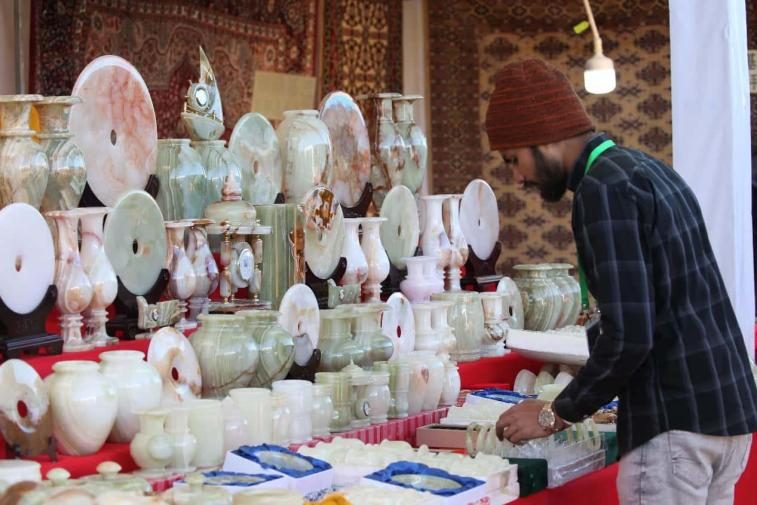
At last year’s Yarlung Commodity Fair, a resident of Shannan and a Nepali vendor spoke briefly.
“Tashi Delek” (Tibetan for “good fortune”) and “Namaste” (the Nepali/South Asian greeting) now resonate commonly in border regions through sustained interaction.
Now in its 44th year, the Yarlung Commodity Fair stands as a cornerstone of Shannan’s annual calendar – a major platform for commercial and cultural exchanges and a window into Xizang’s unique traditions and way of life. As greetings are exchanged in Tibetan and Nepali, hands are shaken, deals are struck, and friendships are forged and deepened. Last year, transactions totaled around 700 million yuan ($97.71 million), reflecting the vibrancy of these interactions.
Today, as the “cradle of Tibetan civilization,” Shannan is expanding its trade with neighboring regions while drawing global enthusiasts of Tibetan culture – particularly during the annual Yarlung Cultural Tourism Festival each summer.
At Mindroling Monastery in Chanang county, Shannan, Australian artist Henrietta Manning – who traveled from Hobart via three flights and a train journey – marveled at the region’s architecture, history, religion, and way of life.
Although less internationally renowned than Lhasa, visitors often describe Shannan as a portal to an ancient era where cultural exchange permeates the landscape. Just like the millennia-old Yarlung River merging with the Yarlung Zangbo River and flowing seaward, this legacy of cultural fusion remains dynamically alive, continuously expanding beyond the mountains.