




By Yang Yi, People’s Daily
A recent report jointly released by Singapore’s banking group DBS and market data and insights firm Cube projects that e-commerce sales in Southeast Asia will more than double from $184 billion in 2024 to $410 billion by 2030, representing a 14 percent compound annual growth rate over the period.
As the region’s e-commerce sector expands at a rapid pace, Chinese companies are joining forces with local businesses to deliver more convenient online shopping experiences. Their contributions range from upgrading technology platforms and innovating logistics systems to cultivating local talent, significantly enhancing the quality and competitiveness of Southeast Asia’s e-commerce industry.
On Lazada, a top e-commerce platform in Southeast Asia, a store specializing in bamboo-woven products and rattan furniture enjoys a 95 percent positive rating. Particularly popular among Thai customers, the shop receives praise in Thai, English and other languages for its prompt delivery, secure packaging, and high product quality.
The store is operated by Yu Le, a native of southwest China’s Yunnan province. A Thai-language major in university, Yu relocated to Thailand after graduation to start her business.
“I’ve been running this company for over four years. We have 26 employees managing live-streaming, customer service, packaging, and warehouse operations,” Yu explained. The warehouse, located in Samut Sakhon province, more than an hour from downtown Bangkok, enables next-day delivery for customers in the capital.
With nearly 700 million people, a significant proportion of them young, and internet penetration exceeding 70 percent in most countries, Southeast Asia is one of the most promising e-commerce markets worldwide. Lazada and Shopee are the region’s leading e-commerce platforms, while Tokopedia and TikTok are rapidly gaining influence.
In 2016, a Chinese company acquired Lazada, undertaking a comprehensive technological upgrade, injecting capital and introducing new talent to strengthen the platform.
In October last year, Lazada unveiled an AI-powered recommendation system that analyzes users’ past purchases to offer smart recommendations and virtual product trials, along with an AI shopping assistant for personalized guidance.
“The online shopping habits of Thai consumers have changed dramatically in recent years, with e-commerce taking an ever-larger share of spending,” said Yu, adding that the market still holds enormous growth potential.
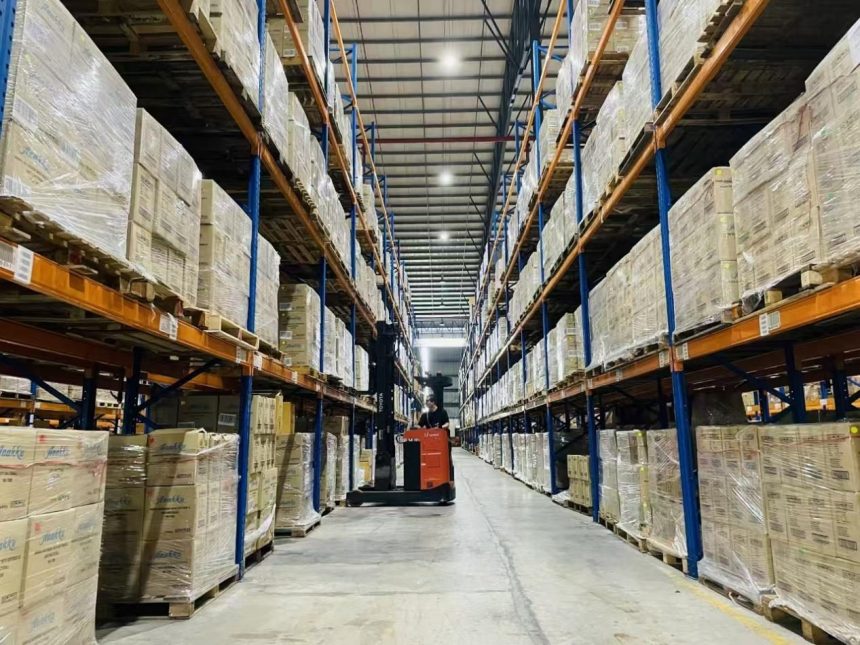
At 7 a.m. in Klang, Selangor state, Malaysia, the warehouse of JINGDONG Logistics, the logistics arm of Chinese e-commerce giant JD. com, is already bustling with activity.
“These building block toys are heading to a shopping mall in Penang today and will go straight onto the shelves,” said William Oey, country manager of JD Logistics in Malaysia.
“We supply both businesses and individual customers across Southeast Asia, with orders placed before 2 p.m. typically shipped the same day,” said Oey.
Oey, an Indonesian who lived in China for more than a decade, said the company aims to replicate China’s speed and efficiency in Southeast Asia. “In China, consumers often receive their orders the next day. We want to offer the same experience here.”
To boost efficiency and accuracy, JD Logistics has introduced automated warehousing for packaging and sorting. At the facility, incoming goods are placed on a smart weighing station equipped with barcode scanning and volumetric measurement systems, which instantly record the item’s weight, dimensions, and volume, streamlining operations. Last year, the company’s business volume in Southeast Asia more than doubled.
As an increasing number of young Southeast Asians enter the e-commerce industry, Chinese companies and universities are investing in local talent development, injecting robust momentum into the sector’s sustainable growth.
In 2022, the College of Arts, Media and Technology at Thailand’s Chiang Mai University, together with its Confucius Institute, launched a joint master’s program on China-Thailand cross-border e-commerce. The program received support from the Lancang-Mekong Cooperation (LMC) Special Fund, projects under a program called “Digital Entrepreneurship Support,” and the Thailand 4.0 development strategy.
“The program has helped train digital professionals and is paving the way for the development of more startups and e-commerce platforms,” said Danaitun Pongpatcharatorntep, deputy dean of the college.
Zunyi Normal University in southwest China’s Guizhou province has also established a cross-border e-commerce training center in cooperation with industry partners. The facility is equipped with eight live-streaming studios targeting markets such as Vietnam and Thailand.
Through the China-Laos e-commerce talent development program, Laotian student Wang Yunlan, known by her Chinese name, has become a live-streaming host at the center after more than a year of training.
“I often host live-streaming sessions here in my spare time. It not only increases my income but also deepens my understanding of cross-border e-commerce. My skills have improved a lot, giving me a strong foundation for future career opportunities and entrepreneurship,” she said.