


By Wang Zheng, People’s Daily
China’s new energy vehicle (NEV) industry is accelerating its shift from rapid expansion to higher-quality growth, driven by breakthroughs in key technologies such as intelligent driving systems and advanced batteries.
In early March, Chinese companies unveiled a new round of innovations in the core technologies underpinning smart, connected NEVs.
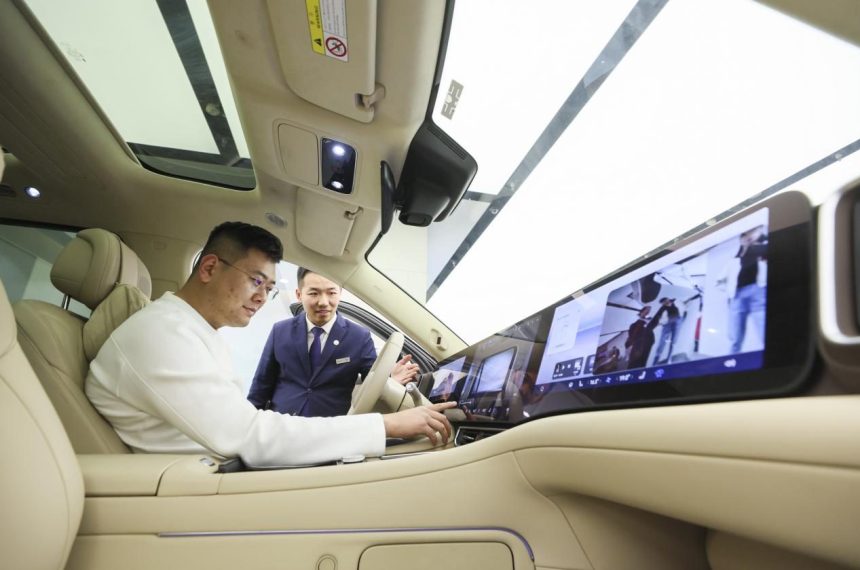
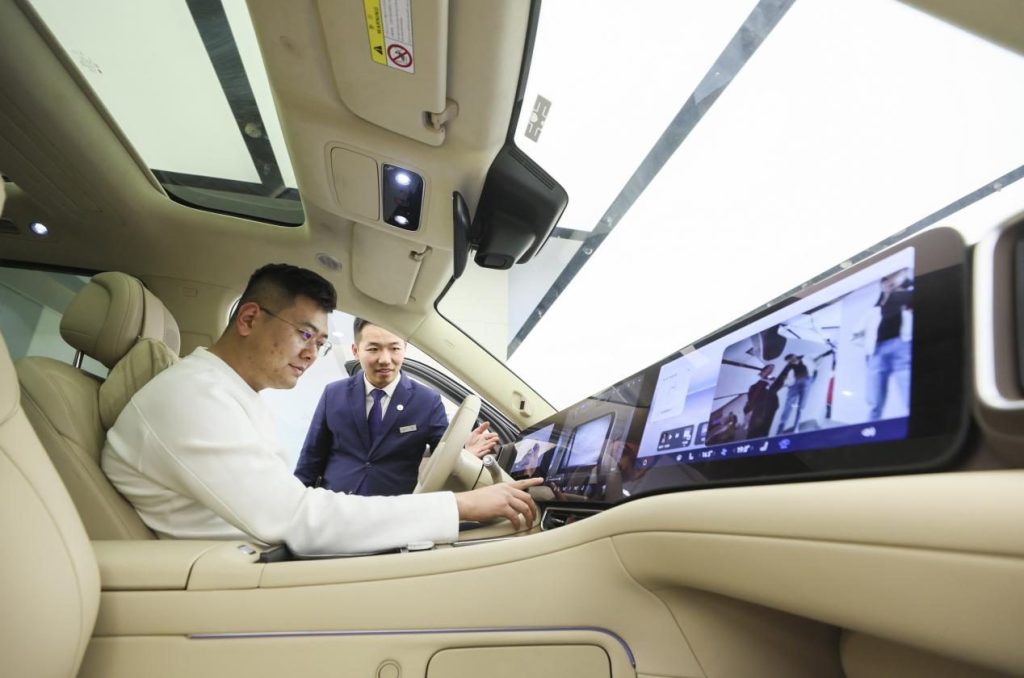
On March 4, Chinese technology giant Huawei launched the world’s first dual-optical-path imaging-grade 896-line LiDAR system under its Qiankun intelligent driving solution.
Compared with conventional 192-line LiDAR, the new system offers four times the resolution and addresses a long-standing industry challenge — wide-angle sensors that capture the full scene but miss details, and telephoto sensors that capture details but sacrifice field of view.
This breakthrough enables vehicles traveling at 120 km/h to reliably identify small obstacles, such as 14 cm-high stones, from 120 meters away.
The following day (March 5th), BYD, China’s leading new energy vehicle manufacturer, unveiled the second generation of its Blade Battery. The upgraded battery delivers what the company calls a breakthrough flash-charging experience: under normal temperatures, it can charge from 10 percent to 70 percent in just five minutes and from 10 percent to 97 percent in nine minutes.
Even at temperatures as low as minus 30 degrees Celsius, the charging process takes only about three minutes longer than under normal conditions. The new battery also increases energy density by five percent and supports a driving range exceeding 1,000 kilometers.
From LiDAR systems for intelligent driving to next-generation power batteries, Chinese companies have achieved fresh breakthroughs in key technologies for smart NEVs in the first quarter of 2026.
How can China’s NEV industry further accelerate its transformation during the 15th Five-Year Plan period (2026-2030)?
China’s 2026 government work report emphasizes building a modernized industrial system and create new forms of smart economy. Automotive experts noted that China’s auto industry is entering a critical stage, shifting from scale expansion toward higher quality and efficiency. Leveraging its industrial chain strengths and economies of scale, the sector is expected to optimize product structures, refine industrial layouts and strengthen brand value.
According to Wang Jianqing, chief master technician at the vehicle assembly plant of Dongfeng Trucks, a subsidiary of Chinese automobile group Dongfeng Motor Corporation, the industry is moving toward greater intelligence, greener technologies and deeper industrial integration.
He stressed the importance of strengthening fundamental research, investing in cutting-edge technologies, and enhancing industry resilience to support this shift.
Vehicles equipped with the Geely’s Qianli Haohan intelligent assisted-driving system have delivered notable performance results. Recent data shows that the system has accumulated over 110 million kilometers of assisted-driving mileage, equivalent to circling the Earth about 2,750 times, while its active collision-avoidance function has prevented 225,000 potential accidents.
“Safety is the core of any intelligent driving system,” said Li Chuanhai, president of the Geely Automobile Research Institute. He said that in 2026, Geely plans to introduce Level-3 high-speed autonomous driving and Level-4 low-speed autonomous functions where regulations permit, while steadily advancing the deployment of Robotaxi vehicles.
China’s push toward higher levels of autonomous driving gained regulatory momentum in late 2025. The Ministry of Industry and Information Technology granted China’s first Level-3 autonomous driving vehicle permits, marking a transition from technological testing to the early stages of large-scale commercial application.
Feng Xingya, chairman of GAC Group, a major Chinese automaker, has urged the establishment of a nationally unified standards and evaluation system for autonomous driving. He proposed opening key testing scenarios such as highways and urban expressways to support testing and commercialization of Level-3 autonomous driving for consumer vehicles, while expanding pilot applications of Level-4 autonomous driving in logistics and mobility services.
Yin Tongyue, chairman of Chery Holding Group, another major Chinese automobile manufacturer, has emphasized the importance of data security in intelligent driving systems. He suggested establishing standardized procedures for data collection, transmission and use, ensuring privacy protection while enabling large-scale Level-3 deployment.
Inside a vehicle assembly plant of mobility technology company Magna International in Graz, Austria, engineering teams from China and Europe are conducting intensive adjustments around production rhythms, process validation and quality inspection. The preparations are aimed at the mid-March rollout of the Aion UT, produced by GAC Aion, an NEV brand of GAC Group.
Following the earlier production of the Aion V, the Aion UT will become the second GAC model to be manufactured locally at the plant.
According to Ma Haiyang, an executive of GAC Group, cooperation with Magna International allows the company to integrate more efficiently with Europe’s mature engineering systems and local supply chains, accelerating the implementation of localized production.
“GAC is steadily advancing local research and development, procurement and manufacturing,” Ma said. “By developing products according to European standards, we aim to better understand and meet the needs of the European market and provide high-quality products and services for local consumers.”
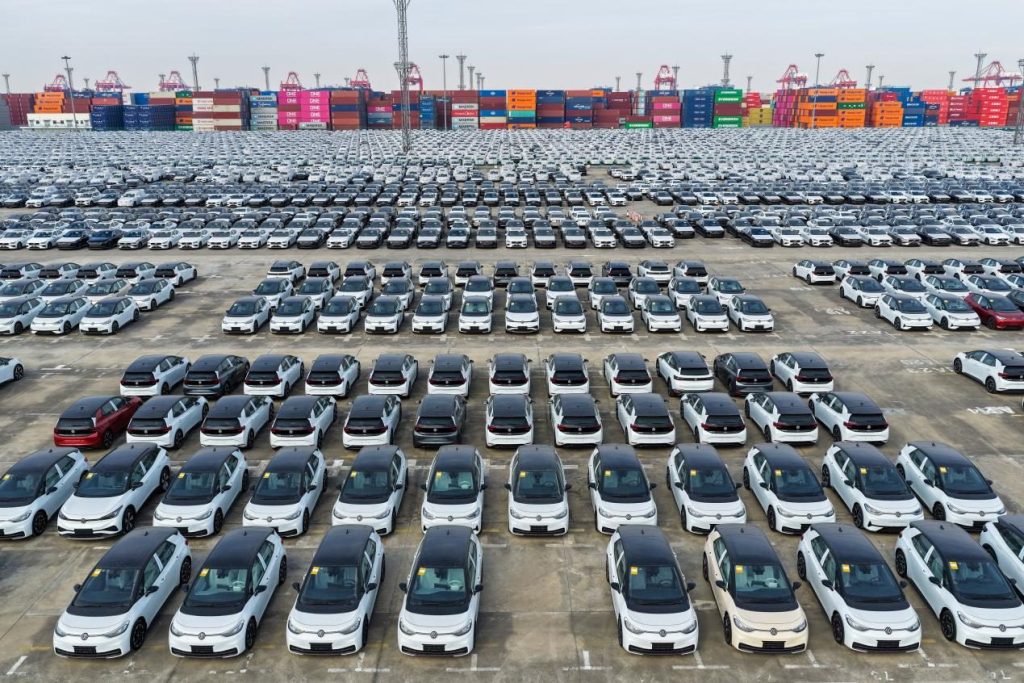
China exported over 7 million units of automobiles in 2025, with NEV exports reaching 2.615 million units, more than doubling year on year and highlighting the industry’s growing international competitiveness.
Despite progress, challenges remain. Limited overseas operational capacity and risks related to global industrial and supply chains continue to test Chinese automakers as they expand abroad.
For Chery Holding Group, globalization means integrating more deeply into local markets. “Our global strategy is to be rooted where we operate and contribute to local development,” said Yin. He noted that Chery’s project in Spain has not only enabled localized vehicle production but also created more than 1,500 local jobs.
“During the 15th Five-Year Plan period, we hope to replicate this model in more parts of the world,” Yin said. “Our goal is to ensure that our products and pricing are acceptable to local consumers, our business models are welcomed by local governments and societies, and our development approach remains environmentally sustainable.”