




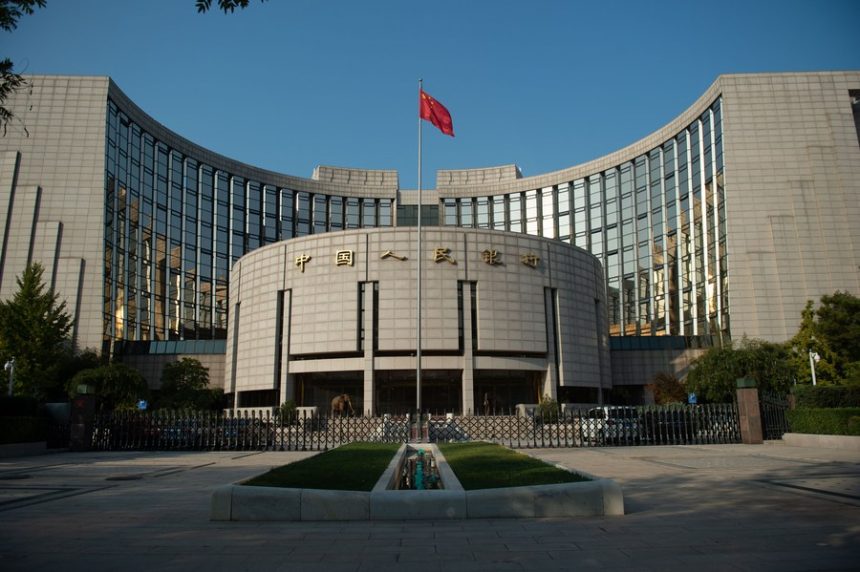
China has witnessed a rapid advancement in the development of green finance, playing a crucial role in the country’s long-term pursuit of low-carbon and sustainable growth. Green finance aims to fund the development of sustainable industries and the transformation of traditional ones towards low-carbon practices. Governor Yi Gang of the People’s Bank of China (PBOC) emphasized its significance during the 14th Lujiazui Forum in Shanghai, particularly in light of China’s ambitious “dual carbon” goals.
China has committed to peaking its carbon dioxide emissions by 2030 and achieving carbon neutrality by 2060, which will lead to profound changes in various sectors, including industrial and energy structures, as well as people’s production and lifestyle patterns, stated Governor Yi.
In recent years, China has intensified its efforts to foster green finance and has achieved remarkable outcomes, establishing a multi-tiered green finance market system, with substantial green loans and bonds that rank among the world’s highest. According to data from the PBOC, by the end of the first quarter of 2023, China’s outstanding green loans in both yuan and foreign currencies exceeded 25 trillion yuan (around 3.48 trillion U.S. dollars), while outstanding green bonds surpassed 1.5 trillion yuan.
Data from financial information provider Wind revealed that domestic commercial banks issued green bonds amounting to 243 billion yuan before June 12 of this year, marking an 88.26 percent year-on-year surge.
Policy incentives have played a significant role in supporting green finance in China in recent years. The PBOC introduced two new special tools in 2021 to provide low-cost financing for carbon reduction initiatives and cleaner, more efficient coal use. These tools emphasized the role of the market and encouraged more private capital to flow into green and low-carbon sectors. The credit facility for supporting carbon emission reduction has been extended until the end of 2024, while the implementation of the special relending tool promoting clean and efficient coal use has been extended until the end of this year.
By the end of April 2023, China’s carbon-reduction credit facility had financed reductions of over 150 million tonnes of carbon emissions, according to PBOC data. The central bank has also set environmental information disclosure requirements for financial institutions and strengthened the climate risk management capabilities of such institutions.
China’s comprehensive policy framework provides significant development opportunities for green finance. The latest estimate from the CICC Global Institute indicates that green investment in China reached approximately 2.6 trillion yuan in 2022, a 20 percent increase compared to the previous year. The growth rate of green investment is expected to surpass that of traditional industries such as real estate and infrastructure in the future.
Governor Yi emphasized that the achievement of China’s “dual carbon” goals necessitates substantial investment in green technology and transformation, and government funds alone cannot cover the required amount. Efforts should be made to guide social funds and fully leverage the market’s decisive role in resource allocation.
Analysts predict that with ongoing financial opening-up, China’s expansive and rapidly expanding green finance sector will also present tremendous opportunities for foreign institutions. In August 2022, the PBOC included Deutsche Bank (China) Co., Ltd., and Societe Generale (China) Ltd. in a lending program designed for carbon emission reduction. This program allows lenders to apply for low-cost funding from the central bank after issuing green loans. The PBOC stated its intention to consider adding other capable foreign financial institutions to the program, underscoring China’s commitment to green transformation, openness, and support for the development of foreign financial institutions in the country.