


By Cheng Chen, Fu Wen, People’s Daily
Most people would throw plastic bottles into recycling bins after drinking bottled water. Where do the recycled bottles go?
In Jinjiang, Quanzhou, southeast China’s Fujian province, a plastic bottle embarked on a green and low-carbon journey.
Early in the morning, a 10-meter-long trailer stopped at a factory entrance of Jinjiang Gangyi Fibre Co., Ltd., a subsidiary of Koyee Corporation, loaded with compressed “bottle bricks” made from discarded plastic bottles.
“We receive 200 tons of these rectangular bricks every day, each of which is 1.5 meters long, with a width and height of nearly one meter,” said Cai Jinzhong, general manager of Koyee Corporation.
Later, these bottle bricks were taken to a workshop by transport vehicles and then unpacked. On the production line, a label peeling machine squeezed and rubbed the bottles to remove the labels, and then the bottles entered a sorting machine. The machine automatically sorted them into blue, white, green and miscellaneous colors. Afterward, together with their caps, they were sent to a high-speed rotating crusher and cut into pieces.
Next, the pieces entered a cleaning machine for washing, disinfection, and drying. Interestingly, during the cleaning process, the pieces were automatically separated into bottle body fragments and bottle cap fragments based on the density difference. The bottle body fragments then became the major raw material for the company’s products.
“In the past, all of this was done manually, which consumed a lot of time, energy and water,” said Cai. At that time, turning one ton of bottles into fragments required 1.5 tons of fresh water, 270 kilowatt-hours of electricity, and 75 workers, Cai explained.
“There were many small, scattered, and disorganized enterprises at the beginning, which managed to lower their cost by avoiding wastewater treatment,” Cai noted.
Thanks to the ongoing efforts of Fujian province in reforming the management system for environmental protection, these enterprises with poor management and pollution have been rectified.
“Many non-compliant enterprises have been shut down, and the remaining ones were required to focus more on environmental protection. The institutional reform in environmental protection is driving the progress of the entire industry,” said Cai.
As she spoke, the bottle fragments were sent to another workshop, where they were further dried in a gigantic rotary blower, then heated and extruded into molten form. They were then fed into a spinning machine, turning into transparent fibers as thin as fishing lines. After stretching, curling, and shaping processes, they were finally cut into polyester staple fibers of different lengths as required.
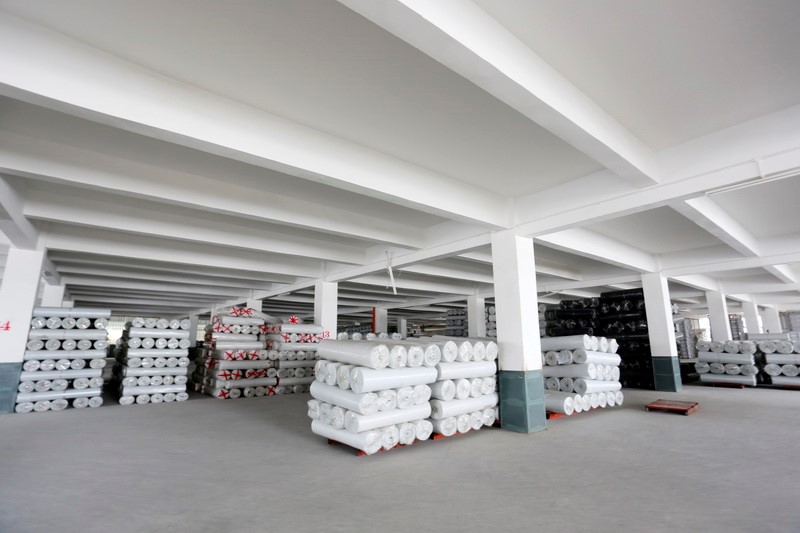
This type of recycled fiber is supplied to other enterprises for producing non-woven fabrics used in shoes, automotive interiors, and other applications, and has gained popularity among many well-known brands.
The “new fashion” of garbage sorting, a simple task in daily life, has magically transformed waste plastic bottles into bundles of fibers, joining the green production cycle and returning to people’s lives.
“Such recycling techniques allow every part of a plastic bottle to be reused. For instance, bottle caps can be sold to other companies and then processed into safety nets, and labels can also be processed into slipper filling material,” said Cai.
Over 20 years ago, Cai and her husband founded Koyee Corporation, which initially focused on producing non-woven fabrics for shoes. Later, they began to produce recycled fibers using bottle fragments as raw materials. In 2016, they introduced the bottle cleaning line to make bottle fragments, extending their business to the upper stream of the non-woven fabric industry.
The company has become a single champion enterprise of China’s manufacturing industry in terms of non-woven fabrics for shoes. Cai said that these achievements were closely associated with China’s reform and opening up.
Technological progress has injected new impetus into Koyee Corporation. For instance, Jinjiang Gangyi Fibre Co., Ltd. has established research cooperation with universities and institutions to develop new products and techniques. After three technological upgrades, the company has achieved automation in its bottle cleaning line.
“We have cut water and electricity costs by half and labor costs by two-thirds in bottle processing,” said Cai.
As a key producer of recycled fibers, Koyee Corporation has been recognized as a national-level green factory, a high-tech enterprise, and a provincial-level pilot demonstration enterprise for the circular economy in China. Last year, it turned approximately 2.7 billion waste plastic bottles and over 40,000 tons of waste fabric scraps into around 100,000 tons of polyester staple fibers.
Cai is quite confident about future development. “China attaches great importance to green and low-carbon development, which is also deeply rooted in people’s hearts,” said Cai, believing that the renewable resource industry will enjoy brighter prospects.
China’s Fujian turns waste plastic bottles into wealth, contributes to green development
Leave a comment