



By Li Jiabao, People’s Daily
In the lower reaches of Sassandra River in Cote d’Ivoire stands the grand Gribo-Popoli hydropower plant, delivering clean electricity to numerous households.
The hydropower plant was built by the Power Construction Corporation of China (PowerChina) and financed by the Export-Import Bank of China. Recently, the first and second power generation units of the hydropower plant were successively connected to the grid. Upon full completion, it is expected to generate 554 million kWh of electricity for Cote d’Ivoire on an annual basis.
A number of eco-friendly projects built by Chinese companies are making the African continent greener.
Green development is not only a part of the eight major initiatives and nine programs jointly implemented by China and Africa under the framework of the Forum on China-Africa Cooperation (FOCAC), but also a key area of high-quality Belt and Road cooperation between China and Africa.
In November 2021, the Eighth Ministerial Conference of the FOCAC held in Senegal adopted the Dakar Action Plan (2022-2024) and the China-Africa Declaration on Climate Change Cooperation, which has further improved the top-level design and institutional mechanisms for China-Africa cooperation on green development.
China is making extensive efforts to share its green development experience with African countries, providing tangible support in technology and capacity building. To date, China has undertaken more than 100 clean energy and green development projects under the FOCAC framework, supporting African countries in green and sustainable development.
Energy shortage is one of the bottlenecks hindering the development of African countries. According to data from the World Bank, only 46.7 percent of Sub-Saharan Africa’s population had access to electricity in 2019.
Africa has enormous potential for renewable energy development. According to the International Energy Agency (IEA), Africa is home to 60% of the best solar resources globally. There is also great potential for hydro, wind, and geothermal power in many African countries.
As China-Africa deepens their cooperation in green energy cooperation, a number of solar power plants, wind farms, and hydroelectric stations are sprouting up across Africa. The abundant resources provided by nature on the African continent are rapidly transforming into green energy sources driving economic and social development.
For instance, the Chinese-built NOOR Solar Complex in Morocco, the world’s largest Concentrated Solar Power (CSP) station, has provided clean energy for more than 1 million Moroccan households, putting an end to the country’s long-standing reliance on imported electricity.
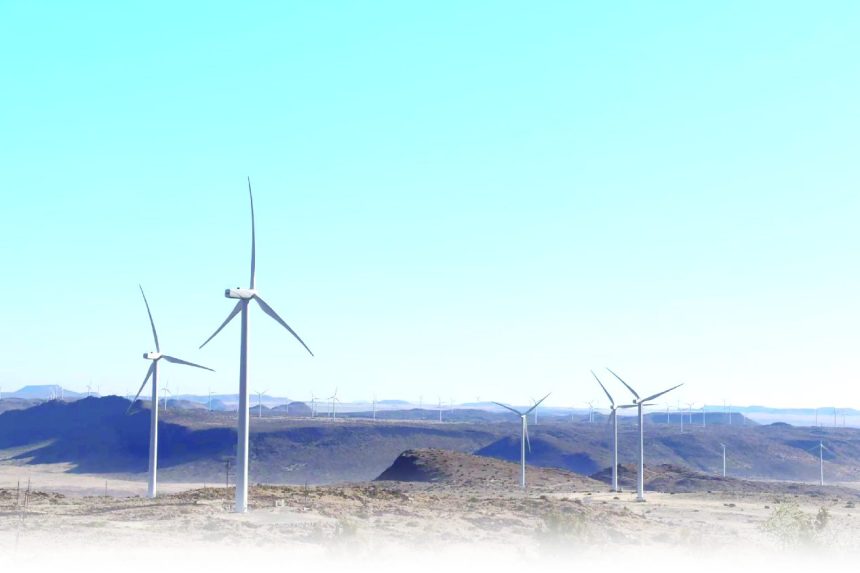
In South Africa, the De Aar Wind Farm developed by a Chinese company has supplied 760 million kilowatt-hours of clean electricity annually, meeting the demand of 300,000 households while reducing 619,900 tons of carbon emissions each year.
In Uganda, the Chinese-built Karuma Hydropower Plant recently connected its final unit to the country’s national grid, becoming the largest hydropower station in the country. It has increased Uganda’s total installed capacity by nearly 50 percent, saving 1.31 million tons of raw coal and reducing carbon emissions by 3.48 million tons each year, equivalent to planting 1.5 million trees.
China-Africa green energy cooperation has illuminated countless homes across the African continent and paved the way for sustainable development.
Desertification poses a severe challenge to many African countries. In 2017, the Xinjiang Institute of Ecology and Geography (XIEG) with the Chinese Academy of Sciences signed a memorandum of understanding with the Pan-African Agency for the Great Green Wall to enhance cooperation in sand control. Through such collaboration, China and Africa have shared experiences and supported each other in combating desertification in recent years.
In 2015, China’s Ministry of Commerce and the Ningxia government established an animal husbandry technology demonstration center in Mauritania, which has introduced water-saving irrigation methods to the country, including drip and sprinkler irrigation, and promoted the use of organic fertilizers such as cattle and sheep manure to improve the soil.
In Kano State, Nigeria, a desertification control project was launched by the African Desertification Control Initiative (ADCI) with support from the Chinese Academy of Sciences to help Nigeria build a “green wall” against desertification.
A joint effort by China and Ethiopia has led to the development of a model aimed at restoring and maintaining the ecological health of grasslands invaded by shrubs in low-altitude areas, which involves removing bushes to promote grass growth, rotating livestock in fenced-off sections, and incorporating different pastoral farming practices.
The Sahel region, a belt located on the southern border of the Sahara Desert, has long suffered from desertification. According to studies by Chinese and African experts, the ratio of desertified land in the region has decreased from 72.31 percent in 2000 to 69.23 percent in 2020. The completion of the Great Green Wall in Africa will greatly improve the natural environment of more than 10 countries south of the Sahara Desert, benefiting millions of local people.
In its cooperation with African countries, China focuses on enhancing their capacity for self-sufficient development through the exchange of valuable experiences.
In November 2020, the China-Africa Environmental Cooperation Center was officially launched, focusing on implementing the China-Africa Green Envoys Program and promoting the China-Africa Innovation Program. These programs aim to strengthen China-Africa environmental cooperation dialogue and promote joint research on environmental issues, while nurturing African professionals in fields such as environmental management, pollution control, and green economy. More and more young Africans are joining these programs, becoming a driving force in China-Africa green cooperation.
China and Africa are committed to energy transition and green development. Moving forward, China and African countries will continue to deepen their green cooperation, writing a new chapter in building a high-level China-Africa community with a shared future in the new era and injecting positive energy into global sustainable development.
China-Africa cooperation leads to greener Africa
Leave a comment