

By Liu Zhiqiang, People’s Daily
As of late July this year, China’s installed solar power capacity officially surpassed that of coal-fired generation for the first time, establishing solar as the country’s largest source of electricity-generating infrastructure.
This milestone stands in stark contrast to the industry’s struggles just over a decade ago. At that time, many small and medium-sized manufacturers were fighting for survival, while even leading firms reported substantial losses — forcing some to shutter operations entirely.
Today, however, China not only holds the world’s largest installed solar capacity year after year but has also cultivated the most comprehensive and globally competitive solar value chain.

How was such a dramatic transformation achieved in little more than ten years?
The journey began in the first decade of this century, when China’s fledgling solar sector experienced explosive growth. By the end of 2010, China’s output of solar cells had climbed to 8,000 megawatts, accounting for about half of the global total.
Yet rapid expansion masked deeper structural vulnerabilities.
First, the industry relied on overseas suppliers for raw materials and equipment, while its main markets were abroad: more than 90 percent of polysilicon was imported, more than 70 percent of products were exported to Europe and the United States, and foreign brands dominated production lines.

Second, the industry remained stuck at a relatively low level of development, relying largely on imitation, replication, and processing materials supplied by others, with excessive duplication of investment and limited technological capabilities.
These weaknesses were exposed starting in 2011, when several Western countries launched anti-dumping and countervailing investigations against Chinese solar products, dealing a major blow to the industry. Markets contracted sharply, and the industry entered a downturn.
Ultimately, overreliance on external inputs and downstream markets eroded industrial autonomy, while confinement to low-margin activities stifled competitiveness — the twin roots of the crisis.
Recognizing these challenges, Chinese policymakers responded with coordinated, forward-looking interventions. Beginning in 2012, central and local authorities rolled out a comprehensive policy framework spanning manufacturing standards, market deployment, fiscal incentives, and tax reforms.
Designed to accelerate the transition toward a modern energy system, these measures revitalized the sector and ushered in what industry observers have called a “second spring. ” On the demand side, the government deliberately expanded domestic consumption to absorb excess capacity.
In 2013, the State Council issued guidelines on promoting the sound development of the solar industry, calling for the wider application of distributed solar power and the development of solar power plants.
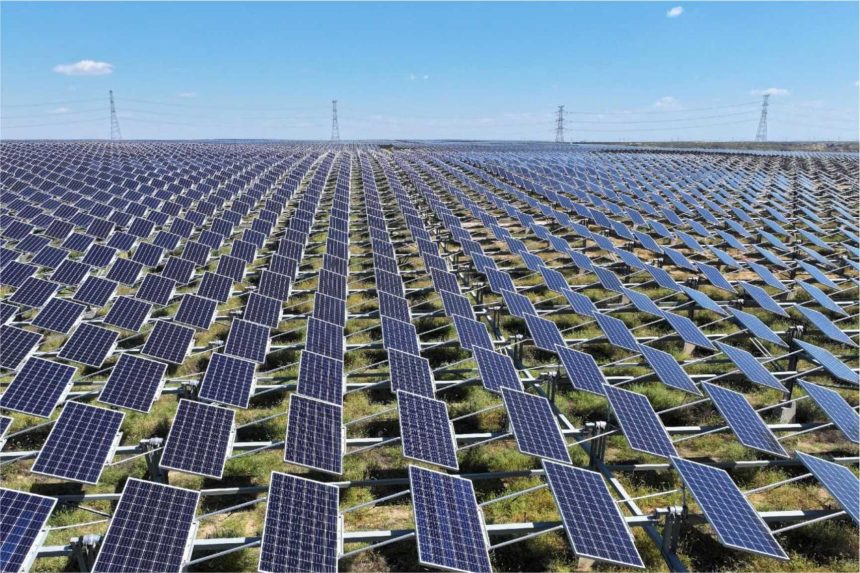
Starting in 2015, China launched a “top runner” program for solar power generation, accelerating the commercialization and wider application of technological advances. From 2021, large-scale renewable energy bases were developed in deserts and other arid areas, creating vast expanses of solar panels across the country’s deserts and wastelands.
These efforts supported the green transition while tapping domestic demand, leading solar power plants to spring up across the country and driving demand for solar equipment.
International markets broadened in parallel. Moving beyond traditional exports to Europe and North America, Chinese solar firms increasingly engaged in the Middle East and Southeast Asia, shifting from simple product sales to integrated solutions encompassing project financing, engineering management, brand development, and long-term operations. This evolution has steadily expanded China’s network of global partners in the clean energy sector.
Simultaneously, the supply side underwent a rigorous push for technological self-reliance. Breakthroughs emerged across multiple areas of solar module manufacturing technology. The conversion efficiency of crystalline silicon solar cells has set new world records time and again. Research and development of next-generation technologies such as perovskite solar cells has accelerated. Technologies including new-type energy storage and ultra-high-voltage power transmission gradually matured, helping address the intermittency and volatility of solar power generation.
Joint efforts by enterprises, universities, research institutes and the user end have driven continuous upgrades in China’s solar products and power generation technologies.
Backed by a complete industrial system and massive application scenarios, it fostered a virtuous cycle between supply and demand. The sector effectively reduced its heavy reliance on imported raw materials and equipment as well as overseas end markets, and its competitiveness grew steadily.
Today, China accounts for more than 90 percent of global polysilicon, wafer and solar cell production capacity and more than 80 percent of global module production capacity, while domestically made equipment has become the backbone of solar production lines. The average cost of solar power generation has fallen sharply.
Clean, cost-effective and reliable, solar power has built its competitiveness on solid technological and industrial capabilities. Its share of China’s total installed power capacity has risen from less than 0.2 percent in 2011 to 31.5 percent today.
Looking back at the development of China’s solar industry, one can see a clear path and valuable lessons for nurturing and growing emerging industries. It was the unwavering pursuit of high-quality development, the full and accurate implementation of the new development philosophy, and accelerated efforts to foster a new development paradigm that enabled China’s solar industry to turn challenges into opportunities and build up strength for sustained growth.
China is now at a critical stage of shifting from old growth drivers to new ones and upgrading its industrial structure, with businesses in some sectors facing new circumstances and challenges. The development of China’s solar industry shows that the challenges confronting an industry can also provide a valuable opportunity for adjustment and upgrading. As long as development continues to move toward higher quality and greater value, industries can weather cycles and keep moving forward under pressure.