



By Chen Yixian, People’s Daily
This summer, a residential community in Xuzhou, east China’s Jiangsu province, drew attention for its innovative approach to cooling. Even when outdoor temperatures exceed 35 degrees Celsius, residents can keep their air conditioners off while maintaining indoor temperatures of around 25 degrees Celsius.
The secret lies beneath their feet.
China University of Mining and Technology, in collaboration with a local company, has tapped into a “natural cooling source” hidden in nearby abandoned mines. The water in these mines remains at around 19 degrees Celsius year-round. It is pumped into residents’ homes through existing heating pipes, providing cooling through radiant floor systems.
China’s action plan for achieving peak carbon emissions during the 15th Five-Year Plan period (2026–2030) calls for accelerating the green and low-carbon transformation of heating and cooling systems. Cities across the country are now exploring district cooling as part of this effort.
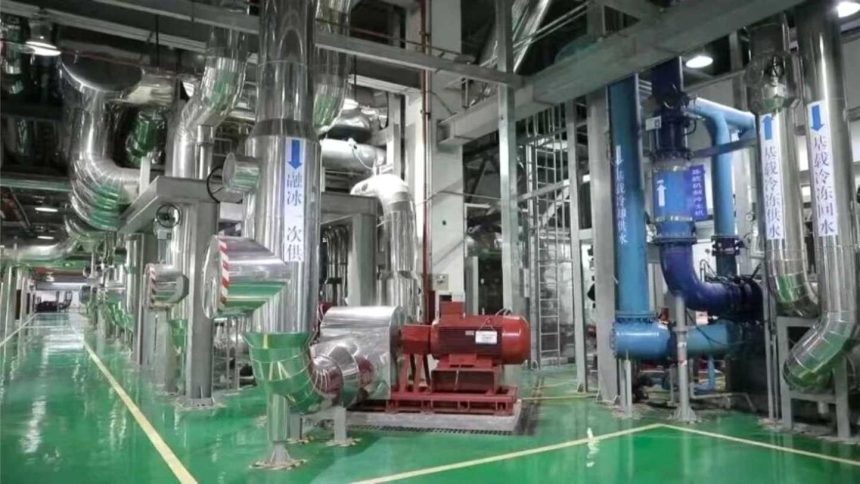
District cooling works much like district heating, except that chilled water circulates through the pipes instead of hot water. In some district cooling systems, chilled water produced at a central cooling plant is delivered through underground pipe networks to buildings, where fan-coil units distribute cool air indoors.
Compared with conventional air conditioning, district cooling offers several clear advantages. It improves cooling efficiency, reduces costs, and saves valuable building space. It also eliminates the noise generated by outdoor air conditioning units and, in some cases, avoids the discomfort of cold air blowing directly onto people, making it more comfortable for users.
However, whether district cooling can be adopted more widely depends on one key principle: solutions must be tailored to local conditions.
In Xuzhou, mine water provides a ready-made cooling source, eliminating the need to consume additional electricity to produce chilled water. The existing pipes can also be used for both heating and cooling, so there is no need for extensive renovation or new wiring and piping. This saves time, effort, and money.
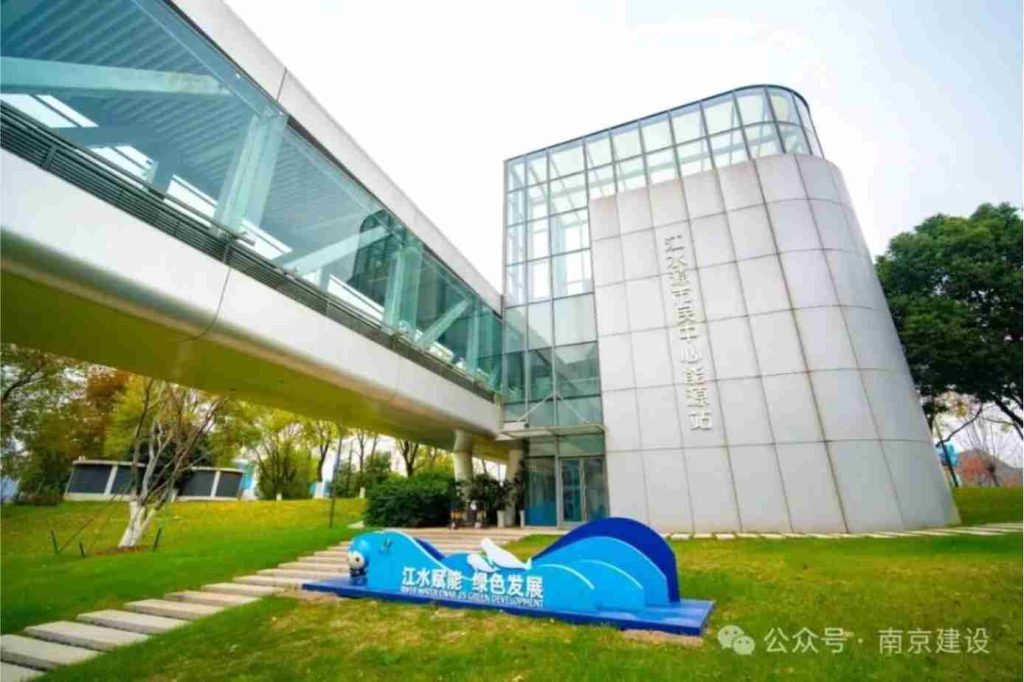
Such natural cooling sources, however, are not available everywhere. Where the available source is too limited, it may not be able to meet substantial cooling demand. In Wuhan, Hubei province, and Nanjing, Jiangsu province, two district cooling projects have helped reduce carbon emissions and improve people’s well-being. Their smart solution lies in using the Yangtze River as a “natural air conditioner.”
The concept of “resources,” of course, is not fixed. In Hangzhou, Zhejiang province, reclaimed water from a wastewater treatment plant provides continuous cooling for about 300,000 square meters of buildings in an industrial park. By improving technology and rethinking how resources are used, more resources that once were idle can be put to work.
The availability of resources is not the only consideration. Environmental sustainability and economic viability are equally important when developing district cooling systems.
Delivering cooling is far more challenging than delivering heat. District heating systems can generally cover a radius of more than 20 kilometers, while district cooling usually works within a radius of no more than 1.5 kilometers, beyond which energy losses rise sharply.
The world’s largest district cooling system is located in Qianhai, Shenzhen, in south China’s Guangdong province. Six cooling plants are already in operation. Once operating at full capacity, the system is expected to reduce refrigerant use by 13.74 tons, with contracted cooling coverage exceeding 5.78 million square meters.
Why is such a huge district cooling system located in Qianhai? Its average annual temperature is above 23 degrees Celsius, and the area is home to a large number of office buildings, major commercial complexes and hotels — all steady and substantial consumers of cooling.
Thanks to economies of scale, district cooling can deliver significant energy savings and carbon reductions, and it has enormous potential. However, if equipment sits idle after a system is built, it can also result in substantial waste. This makes careful assessment and sound decision-making essential. Planning should take all relevant factors into account from the outset.
In the first half of this year, China’s exports of air conditioners to the European Union reached a record high, with export value up 43.2 percent year on year.
European cities have many historical buildings and complex installation conditions. To meet these needs, Chinese companies have developed energy-efficient, low-noise portable split air conditioners that can be plugged in and used immediately. The products have proved highly popular.
The localization embedded in these products and services reflects the wisdom of respecting both the laws of nature and the needs of users. It’s just another example of tailoring solutions to local conditions.
The carbon peaking and carbon neutrality goals are China’s solemn commitment to the international community. Why can China be trusted to deliver on its words and fulfill its commitments?
The answer lies in the many pieces of the green development puzzle — from green buildings and low-carbon energy to smarter ways of using resources — all built on the principles of taking realities into account, pursuing steady progress and finding innovative solutions.