



By Xu Jun, People’s Daily
The upcoming “two sessions,” the annual meetings of China’s top legislature, the National People’s Congress (NPC), and the top political advisory body, the National Committee of the Chinese People’s Political Consultative Conference (CPPCC), provide an important opportunity to observe Chinese modernization and a key window into understanding whole-process people’s democracy in China.
As an original and defining concept, whole-process people’s democracy is deeply embedded in the daily lives of the Chinese people.
Deliberating the draft outline of the 15th Five-Year Plan (2026-2030) is a major focus of this year’s “two sessions.” The process of formulating the plan itself is a vivid practice of whole-process people’s democracy.
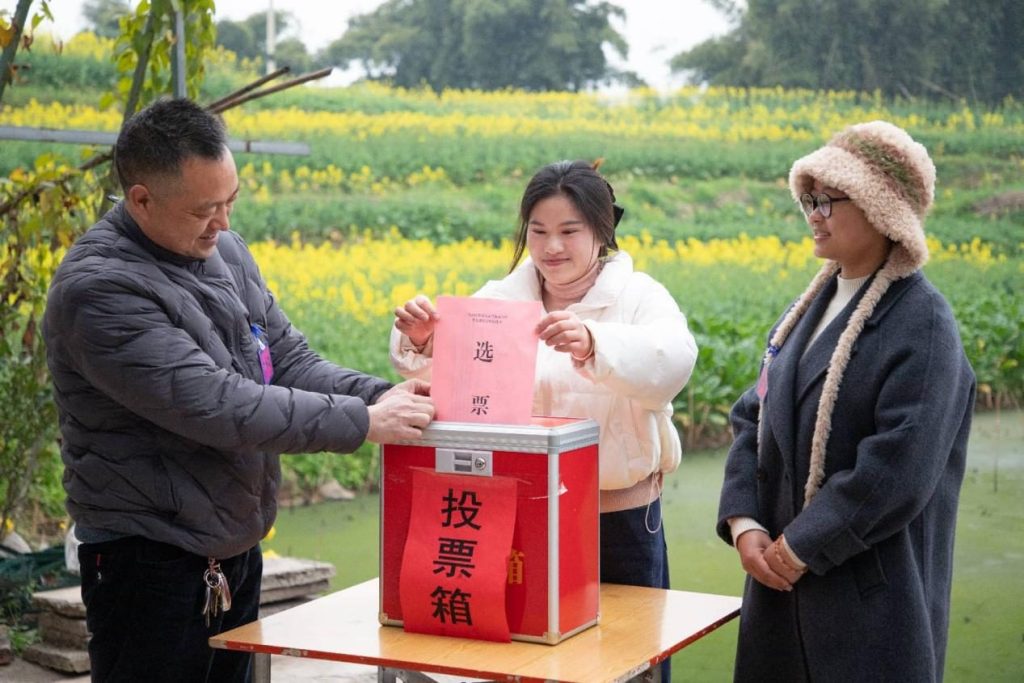
From May 20 to June 20, 2025, an online public consultation was conducted for the formulation of the 15th Five-Year Plan. The initiative drew over 3.11 million valid submissions, yielding more than 1,500 constructive suggestions across 27 topics.
The drafting group attached great importance to these inputs, carefully studied and incorporated them, with many reflected in relevant policy measures of the plan in appropriate forms.
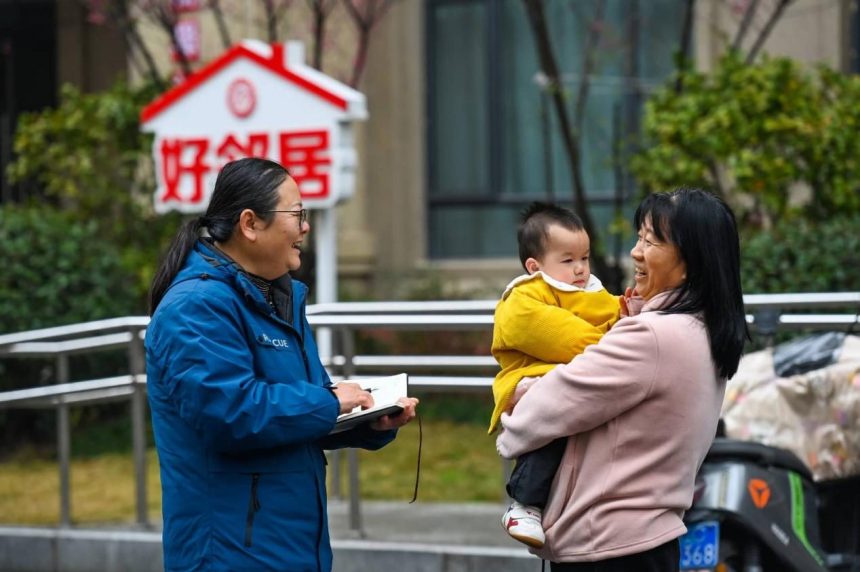
By the end of 2025, the Legislative Affairs Commission of the NPC Standing Committee had established 60 grassroots legislative outreach offices, which in turn drove the establishment of more than 7,800 such offices at the provincial and municipal levels. In 2025, more than 1,400 CPPCC members submitted over 12,000 reports on public sentiment. These diverse channels for reflecting public opinion serve as important bridges linking the people with the authorities.
Such democracy widely participated by the people has made “micro-governance” more dynamic and efficient.
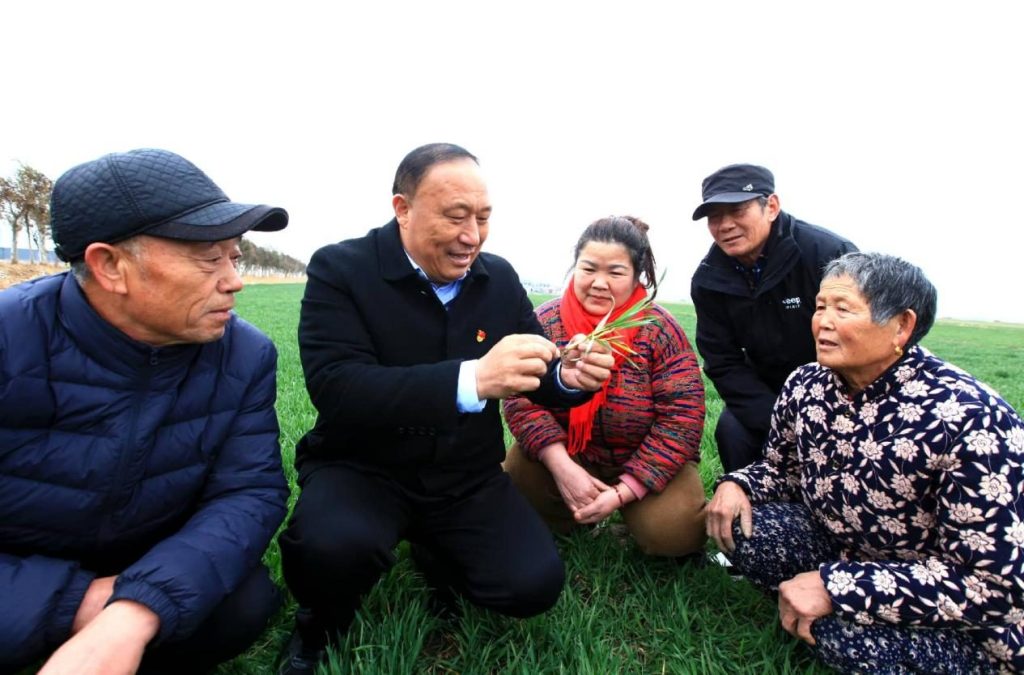
At a “People’s Livelihood Teahouse” in Wenhe subdistrict, Guangling district, Yangzhou, east China’s Jiangsu province, deputies to people’s congresses at various levels, members of CPPCC local committees, and local residents gather to discuss issues affecting people’s livelihoods. There, residents’ concerns are addressed, and some suggestions are promptly relayed to relevant authorities.
In recent years, similar platforms have been established one after another, making primary-level governance smoother and more effective.
From farmlands and factory floors to hospitals, schools, and communities, NPC deputies and CPPCC members diligently perform their duties, soliciting opinions from the public, and turning suggestions into concrete actions that deliver tangible benefits.
In 2025, all 269 motions and 9,160 suggestions submitted by NPC deputies were reviewed and handled, with responses provided to the deputies. Of the more than 5,900 proposals submitted by CPPCC members, over 5,000 were filed, and some suggestions were incorporated into relevant policy documents.
A defining feature of “whole-process” is that it runs through the entire chain, spans all dimensions, and covers all areas.
Take food safety, a matter of widespread public concern, as an example. From May to September 2025, the NPC Standing Committee’s law enforcement inspection team carried out inspections on the implementation of the Food Safety Law.
The team placed great emphasis on hearing public voices, incorporating public opinion, and pooling public wisdom.
Two deputies who led relevant motions and 10 other deputies were invited to participate throughout the process, contributing professional expertise and offering suggestions from different perspectives on strengthening food safety.
The team also organized a questionnaire survey on the implementation of the law, collecting 488,200 valid responses and 119,800 public suggestions.
During the inspection, the NPC Standing Committee also completed targeted amendments to the Food Safety Law. By integrating legislative and oversight functions, it further urged localities and departments to fulfill their responsibilities, improved relevant laws, regulations, and standards systems, strengthened law enforcement capacity, and consolidated a social governance framework for food safety, collectively safeguarding public health.
Whole-process people’s democracy is not occasional, partial, fragmented, or piecemeal. Rather, it runs through the entire chain of democratic election, consultation, decision-making, management, and oversight; spans all aspects of political and social life; and covers all fields, including economic, political, cultural, social, and ecological development.
This fundamentally addresses the problem of systems where people are engaged only when voting and go dormant afterward.
Continuously meeting the people’s growing needs for a better life is an inherent requirement of developing democracy. Democracy is meant to solve the problems for the people. This is one of the defining features that distinguishes China’s whole-process people’s democracy from the election-centered model of democracy in some Western countries, and it is also a key strength of this form of democracy.
China’s development demonstrates that only a democracy suited to a country’s specific conditions can be reliable and effective. The defining features of “whole-process” people’s democracy enrich the forms of human political civilization and offer a Chinese approach to exploring better social systems.
Looking ahead, China will continue to follow a path of democratic development suited to its national conditions, advocate and support other countries in independently choosing their own paths of democratic development, and work together to advance the progress of democracy for all humanity.