




By Misbah Najib Khan
Sustainable agriculture is more than just a buzzword; it is a crucial approach to ensure the food security in Pakistan. With a rapidly growing population and limited resources, it is essential to adopt sustainable practices as a mean to balance economic growth and environmental sustainability.
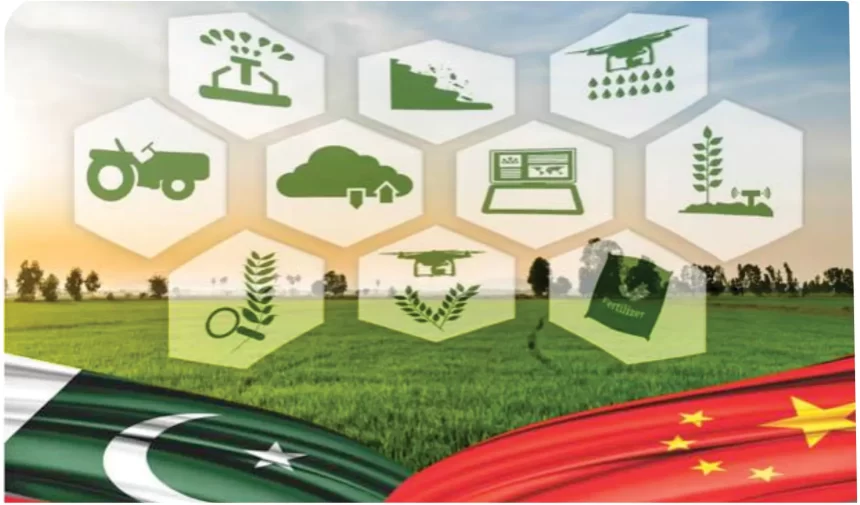
This issue in Pakistani agricultural sector requires a focus on sustainable agriculture. Pakistan faces a variety of difficulties, including a lack of water, degraded land, budgetary constraints, and technology limitations. It is beneficial to examine the cross-learnings that may be drawn from China’s sustainable agriculture practices in this material. Comprehending the lessons China has imparted on sustainable agriculture will enable Pakistan to make progress toward environmental preservation, enhance economic outcomes, and ensure food security for its growing populace.Sustainable agriculture offers a path to long-term food security, economic stability, and environmental resilience. Sustainable farming practices limit harmful environmental effects such soil erosion, water contamination, and groundwater level depletion, protecting agricultural land’s productivity and health for future generations..
Agriculture accounts for about 22.9% of Pakistan’s GDP, yet there are numerous challenges in the industry. Outdated farming practices, resistance to new technologies, water constraint issues, and soil degradation lead to lower yields and increased vulnerability to climate change. Policy must focus on the transition to sustainable agriculture for a more prosperous and secure future.
China’s large agricultural sector and technological advancements can teach Pakistan a lot about sustainable agriculture methods.
The foundation of China’s agricultural success story is a comprehensive paradigm that combines technology, policy support, and research and development. Agriculture is becoming a very environmentally friendly and productive sector of the economy. Consequently, Pakistan must follow this “all-encompassing” path as well.
Agroforestry, organic farming, precision farming, and other sustainable agriculture methods have all been implemented in China. These techniques promote resource efficiency, reduce the need for chemical inputs, and improve soil health—all of which eventually lead to higher yields and better environmental outcomes.
Pakistan’s agriculture industry suffers a wide range of difficulties, including a lack of water, eroding soil, and a sluggish adoption of new technologies. Rainwater collection and drip irrigation are examples of sustainable water management techniques that are mandated by the legislation. Soil productivity and health can be restored by implementing better land management practices, such as conservation agriculture. Promoting information transmission and removing obstacles are essential for sustainable agricultural development.Pakistan can draw valuable lessons from China’s successful journey towards sustainable agriculture.First and foremost, China’s success in sustainable agriculture can be attributed mostly to R&D, regulatory support, and PPPs. Pakistan can learn from China’s emphasis on innovation, teamwork, and long-term planning in order to replicate comparable results.Second, even if not all of China’s sustainable agriculture techniques can be applied right now, it is nevertheless crucial to adapt them to Pakistan’s unique situation. In order to effectively apply sustainable agriculture practices in Pakistan, it is necessary to increase farmer-to-farmer knowledge exchange, ensure policy alignment, and adapt technologies and methods to local conditions..
Thirdly by embracing sustainable agriculture and leveraging cross-learnings from China, Pakistan can pave the way for a greener, more productive, and resilient agricultural sector. It’s time to take the necessary steps towards a brighter and more sustainable future for Pakistan’s agriculture. The traditional farming in Pakistan needs to be replaced with the modren techniqe like the chinese tunnel farming is a game changer ,provides good crop with high profitabilitty rate. So, there is a need of virtual trainings from chinese experts for the adoptations of these techniques.Pakistan’s government has shown that it understands the importance of sustainable agriculture by taking some commendable actions to promote it. One such initiative is the Prime Minister’s Agricultural Emergency Program, which aims to boost agricultural output through a variety of strategies including encouraging organic farming, expanding the amount of financing available to small-scale farmers, and enhancing water efficiency. In addition, the government has implemented the National Program for Food Security and Climate Change Adaptation, which focuses on sustainable land management and climate-smart agriculture practices.In conclusion, the government of Pakistan has made strides toward encouraging sustainable agriculture, but there is still room for development. Financial incentives, educational and training initiatives, more funding for research and development, and enhanced infrastructure are some of the policy ideas. While education and training programs can provide farmers with the essential knowledge and skills, financial incentives can also serve as a catalyst for them to switch from conventional farming methods. Investments in R&D can result in the creation of novel crop varieties and technologies. Direct marketing channels and cold storage facilities can help increase market accessibility. Restoring soil health and productivity is possible with the use of sustainable land management practices. Modern agricultural technology are being adopted slowly because of poor extension services, expensive costs, and restricted information availability.Pakistan is getting closer to sustainable agriculture because of government initiatives and farmers’ dedication. Sustainable practices have the potential to enhance social cohesiveness, the environment, and economic prospects through expediting change. If Pakistan receives the proper support and collaboration, its agriculture sector can have a prosperous future.
So, let’s embrace sustainable farming practices and cultivate a greener, healthier, and more prosperous Pakistan!
Misbah Najib Khan, Research Associate at Sustainable Development Policy Institute (SDPI)