




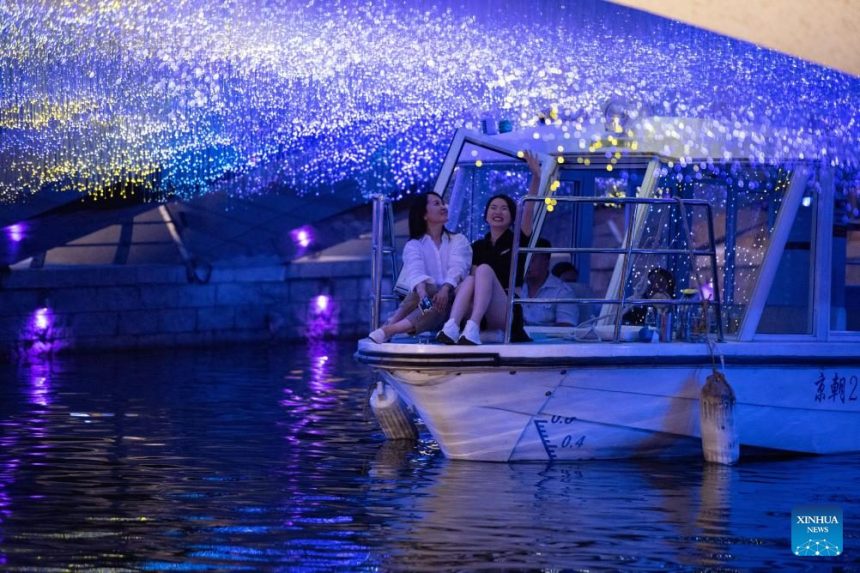
The Seine River, the second largest river in France, meanders through the heart of Paris. Flowing from west to east, it divides the city into the iconic “Left Bank” and “Right Bank”. The Left Bank is defined by an artistic ambiance, adorned with cafes, theaters, and bookstores, creating a haven for the literary circle and a cultural paradise. On the other hand, the Right Bank houses prestigious landmarks such as the Louvre, the former royal palace, and the Elysee Palace, the current presidential residence, establishing itself as the political center of Paris.
Beijing’s Liangma River used to be a place where caravans would cleanse and refresh their horses before entering the city. Originating from the moat of Beijing, it flows from west to east, eventually merging into the Ba River. The Liangma River traverses diverse areas, including foreign embassies, international hotels, department stores, and trendy commercial streets, connecting various international business districts in Beijing. In 2019, the city’s Chaoyang District embarked on a waterfront project along the Liangma River. After two years of development and environmental improvements, the Liangma River has transformed from a mere waterway into a captivating aquatic landscape, which consists of “one river, two lakes, 24 bridges, and 18 scenic spots”. It has now become a must-visit destination in Beijing.
During scorching summer days, the riverbanks in cities often serve as the perfect urban “living room”. Paris and Beijing, despite their differences, share the same leisurely activities along their respective riverbanks amid the summer heat. The waterside living scenes along both rivers reflect a common pursuit of quality life in Nature’s embrace. (Xinhua/Chen Zhonghao)
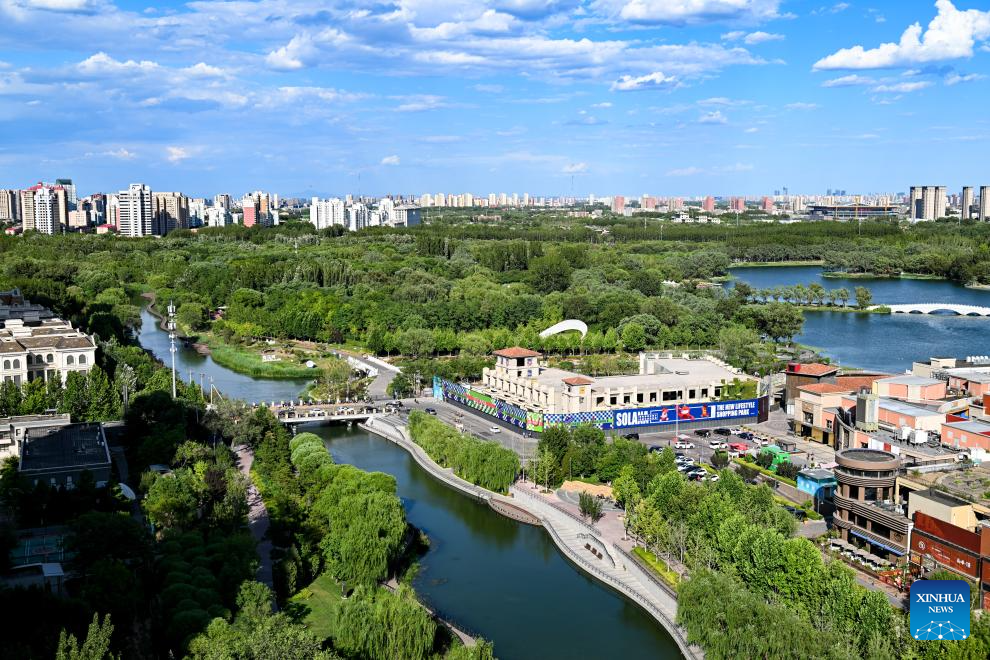
This photo taken on July 8, 2023 shows a view of the Liangma River in Beijing, capital of China.
The Seine River, the second largest river in France, meanders through the heart of Paris. Flowing from west to east, it divides the city into the iconic “Left Bank” and “Right Bank”. The Left Bank is defined by an artistic ambiance, adorned with cafes, theaters, and bookstores, creating a haven for the literary circle and a cultural paradise. On the other hand, the Right Bank houses prestigious landmarks such as the Louvre, the former royal palace, and the Elysee Palace, the current presidential residence, establishing itself as the political center of Paris.
Beijing’s Liangma River used to be a place where caravans would cleanse and refresh their horses before entering the city. Originating from the moat of Beijing, it flows from west to east, eventually merging into the Ba River. The Liangma River traverses diverse areas, including foreign embassies, international hotels, department stores, and trendy commercial streets, connecting various international business districts in Beijing. In 2019, the city’s Chaoyang District embarked on a waterfront project along the Liangma River. After two years of development and environmental improvements, the Liangma River has transformed from a mere waterway into a captivating aquatic landscape, which consists of “one river, two lakes, 24 bridges, and 18 scenic spots”. It has now become a must-visit destination in Beijing.
During scorching summer days, the riverbanks in cities often serve as the perfect urban “living room”. Paris and Beijing, despite their differences, share the same leisurely activities along their respective riverbanks amid the summer heat. The waterside living scenes along both rivers reflect a common pursuit of quality life in Nature’s embrace. (Xinhua/Chen Zhonghao)

People enjoy an evening picnic by the Liangma River in Beijing, capital of China, June 14, 2023.
The Seine River, the second largest river in France, meanders through the heart of Paris. Flowing from west to east, it divides the city into the iconic “Left Bank” and “Right Bank”. The Left Bank is defined by an artistic ambiance, adorned with cafes, theaters, and bookstores, creating a haven for the literary circle and a cultural paradise. On the other hand, the Right Bank houses prestigious landmarks such as the Louvre, the former royal palace, and the Elysee Palace, the current presidential residence, establishing itself as the political center of Paris.
Beijing’s Liangma River used to be a place where caravans would cleanse and refresh their horses before entering the city. Originating from the moat of Beijing, it flows from west to east, eventually merging into the Ba River. The Liangma River traverses diverse areas, including foreign embassies, international hotels, department stores, and trendy commercial streets, connecting various international business districts in Beijing. In 2019, the city’s Chaoyang District embarked on a waterfront project along the Liangma River. After two years of development and environmental improvements, the Liangma River has transformed from a mere waterway into a captivating aquatic landscape, which consists of “one river, two lakes, 24 bridges, and 18 scenic spots”. It has now become a must-visit destination in Beijing.
During scorching summer days, the riverbanks in cities often serve as the perfect urban “living room”. Paris and Beijing, despite their differences, share the same leisurely activities along their respective riverbanks amid the summer heat. The waterside living scenes along both rivers reflect a common pursuit of quality life in Nature’s embrace. (Xinhua/Ju Huanzong)

People enjoy paddleboarding on the Liangma River in Beijing, capital of China, June 23, 2023.
The Seine River, the second largest river in France, meanders through the heart of Paris. Flowing from west to east, it divides the city into the iconic “Left Bank” and “Right Bank”. The Left Bank is defined by an artistic ambiance, adorned with cafes, theaters, and bookstores, creating a haven for the literary circle and a cultural paradise. On the other hand, the Right Bank houses prestigious landmarks such as the Louvre, the former royal palace, and the Elysee Palace, the current presidential residence, establishing itself as the political center of Paris.
Beijing’s Liangma River used to be a place where caravans would cleanse and refresh their horses before entering the city. Originating from the moat of Beijing, it flows from west to east, eventually merging into the Ba River. The Liangma River traverses diverse areas, including foreign embassies, international hotels, department stores, and trendy commercial streets, connecting various international business districts in Beijing. In 2019, the city’s Chaoyang District embarked on a waterfront project along the Liangma River. After two years of development and environmental improvements, the Liangma River has transformed from a mere waterway into a captivating aquatic landscape, which consists of “one river, two lakes, 24 bridges, and 18 scenic spots”. It has now become a must-visit destination in Beijing.
During scorching summer days, the riverbanks in cities often serve as the perfect urban “living room”. Paris and Beijing, despite their differences, share the same leisurely activities along their respective riverbanks amid the summer heat. The waterside living scenes along both rivers reflect a common pursuit of quality life in Nature’s embrace. (Xinhua/Ju Huanzong)
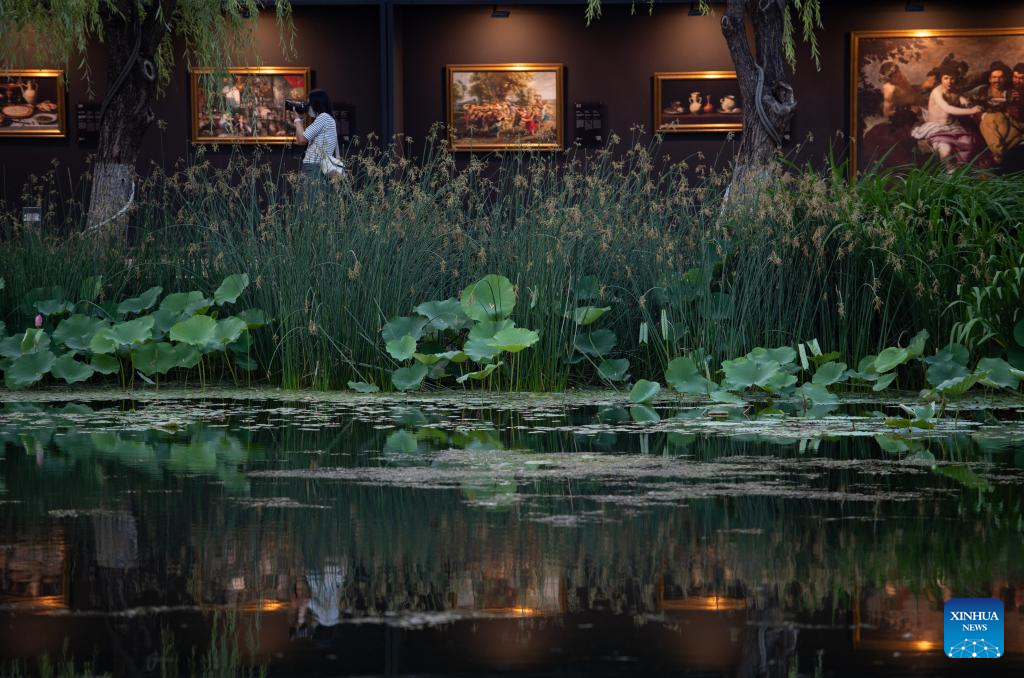
An European oil painting exhibition is held along a section of the Liangma River in Beijing, capital of China, June 16, 2023.
The Seine River, the second largest river in France, meanders through the heart of Paris. Flowing from west to east, it divides the city into the iconic “Left Bank” and “Right Bank”. The Left Bank is defined by an artistic ambiance, adorned with cafes, theaters, and bookstores, creating a haven for the literary circle and a cultural paradise. On the other hand, the Right Bank houses prestigious landmarks such as the Louvre, the former royal palace, and the Elysee Palace, the current presidential residence, establishing itself as the political center of Paris.
Beijing’s Liangma River used to be a place where caravans would cleanse and refresh their horses before entering the city. Originating from the moat of Beijing, it flows from west to east, eventually merging into the Ba River. The Liangma River traverses diverse areas, including foreign embassies, international hotels, department stores, and trendy commercial streets, connecting various international business districts in Beijing. In 2019, the city’s Chaoyang District embarked on a waterfront project along the Liangma River. After two years of development and environmental improvements, the Liangma River has transformed from a mere waterway into a captivating aquatic landscape, which consists of “one river, two lakes, 24 bridges, and 18 scenic spots”. It has now become a must-visit destination in Beijing.
During scorching summer days, the riverbanks in cities often serve as the perfect urban “living room”. Paris and Beijing, despite their differences, share the same leisurely activities along their respective riverbanks amid the summer heat. The waterside living scenes along both rivers reflect a common pursuit of quality life in Nature’s embrace. (Xinhua/Chen Zhonghao)
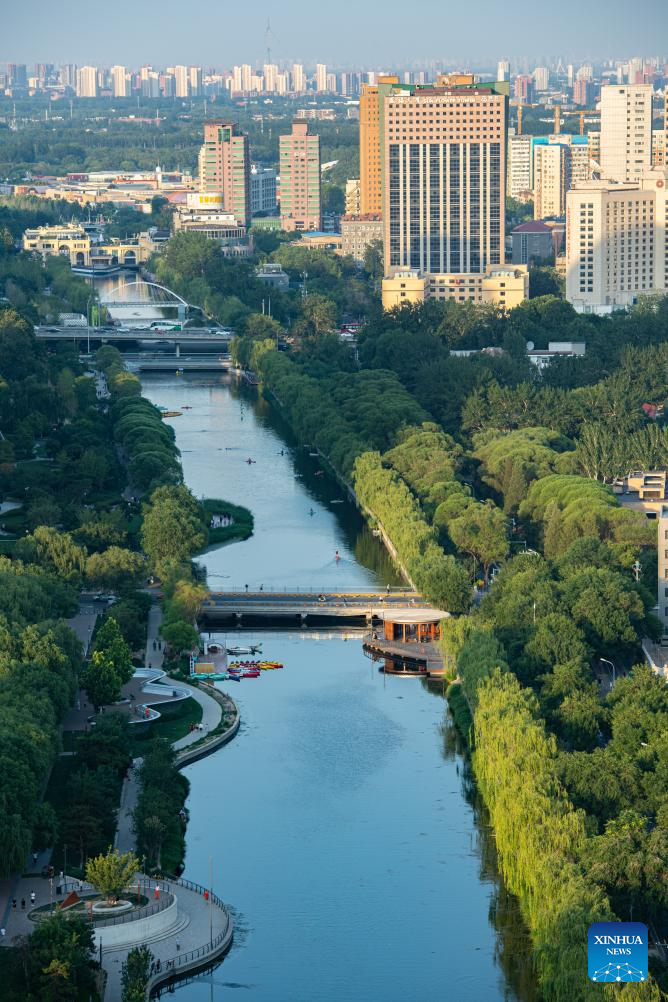
This photo taken on June 14, 2023 shows a view of the Liangma River in Beijing, capital of China.
The Seine River, the second largest river in France, meanders through the heart of Paris. Flowing from west to east, it divides the city into the iconic “Left Bank” and “Right Bank”. The Left Bank is defined by an artistic ambiance, adorned with cafes, theaters, and bookstores, creating a haven for the literary circle and a cultural paradise. On the other hand, the Right Bank houses prestigious landmarks such as the Louvre, the former royal palace, and the Elysee Palace, the current presidential residence, establishing itself as the political center of Paris.
Beijing’s Liangma River used to be a place where caravans would cleanse and refresh their horses before entering the city. Originating from the moat of Beijing, it flows from west to east, eventually merging into the Ba River. The Liangma River traverses diverse areas, including foreign embassies, international hotels, department stores, and trendy commercial streets, connecting various international business districts in Beijing. In 2019, the city’s Chaoyang District embarked on a waterfront project along the Liangma River. After two years of development and environmental improvements, the Liangma River has transformed from a mere waterway into a captivating aquatic landscape, which consists of “one river, two lakes, 24 bridges, and 18 scenic spots”. It has now become a must-visit destination in Beijing.
During scorching summer days, the riverbanks in cities often serve as the perfect urban “living room”. Paris and Beijing, despite their differences, share the same leisurely activities along their respective riverbanks amid the summer heat. The waterside living scenes along both rivers reflect a common pursuit of quality life in Nature’s embrace. (Xinhua/Chen Zhonghao)
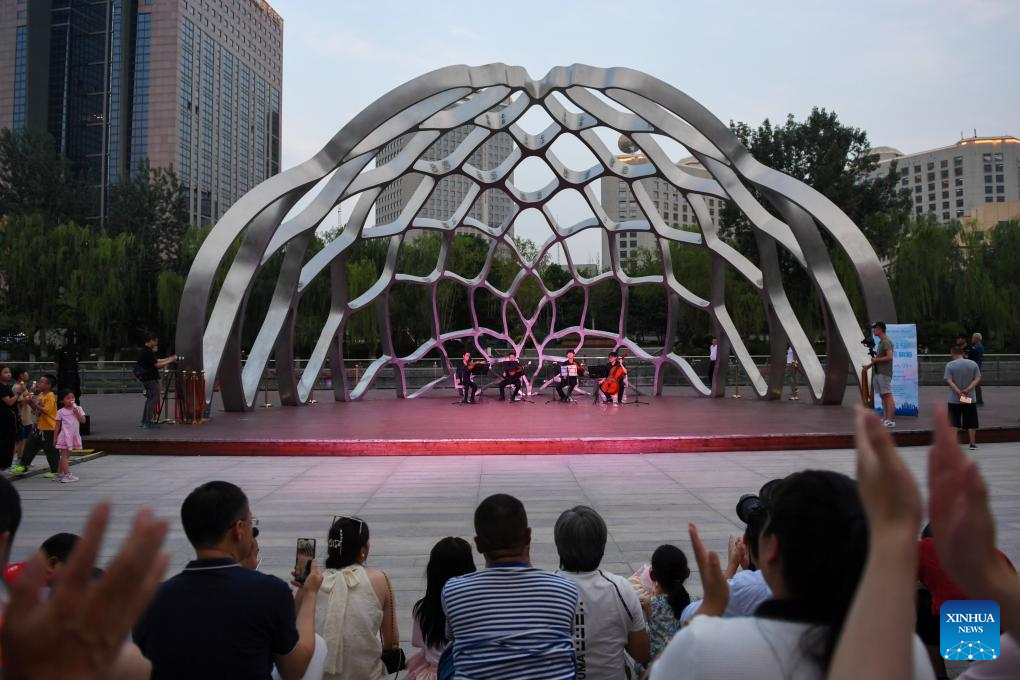
People watch an evening performance by the Liangma River in Beijing, capital of China, June 23, 2023.
The Seine River, the second largest river in France, meanders through the heart of Paris. Flowing from west to east, it divides the city into the iconic “Left Bank” and “Right Bank”. The Left Bank is defined by an artistic ambiance, adorned with cafes, theaters, and bookstores, creating a haven for the literary circle and a cultural paradise. On the other hand, the Right Bank houses prestigious landmarks such as the Louvre, the former royal palace, and the Elysee Palace, the current presidential residence, establishing itself as the political center of Paris.
Beijing’s Liangma River used to be a place where caravans would cleanse and refresh their horses before entering the city. Originating from the moat of Beijing, it flows from west to east, eventually merging into the Ba River. The Liangma River traverses diverse areas, including foreign embassies, international hotels, department stores, and trendy commercial streets, connecting various international business districts in Beijing. In 2019, the city’s Chaoyang District embarked on a waterfront project along the Liangma River. After two years of development and environmental improvements, the Liangma River has transformed from a mere waterway into a captivating aquatic landscape, which consists of “one river, two lakes, 24 bridges, and 18 scenic spots”. It has now become a must-visit destination in Beijing.
During scorching summer days, the riverbanks in cities often serve as the perfect urban “living room”. Paris and Beijing, despite their differences, share the same leisurely activities along their respective riverbanks amid the summer heat. The waterside living scenes along both rivers reflect a common pursuit of quality life in Nature’s embrace. (Xinhua/Ju Huanzong)
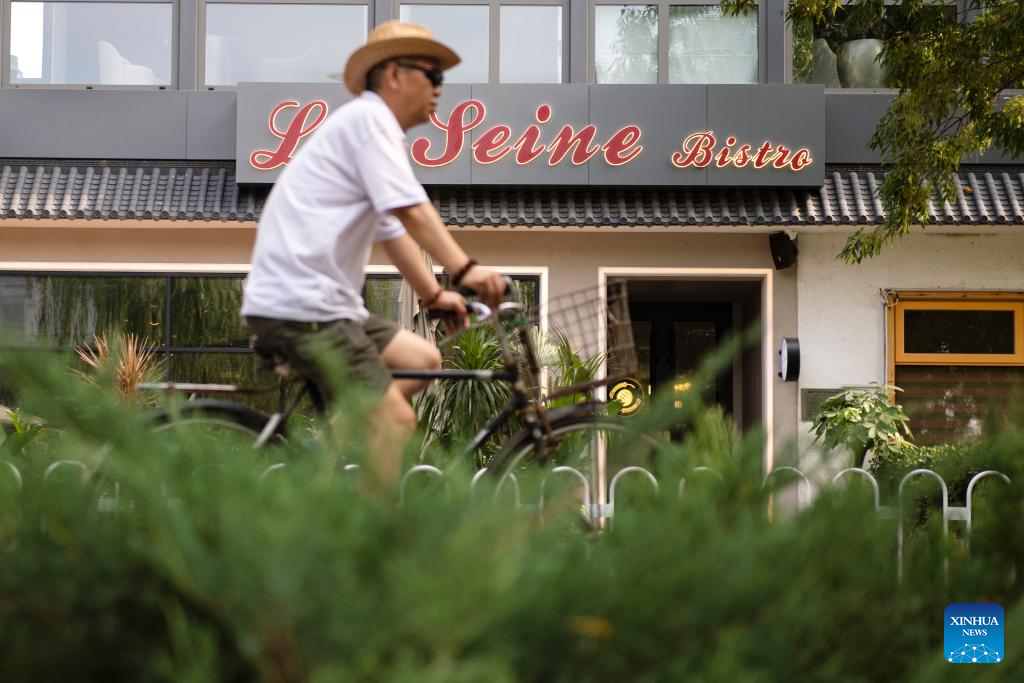
A biker rides past a western restaurant named “La Seine” by the Liangma River in Beijing, capital of China, June 25, 2023.
The Seine River, the second largest river in France, meanders through the heart of Paris. Flowing from west to east, it divides the city into the iconic “Left Bank” and “Right Bank”. The Left Bank is defined by an artistic ambiance, adorned with cafes, theaters, and bookstores, creating a haven for the literary circle and a cultural paradise. On the other hand, the Right Bank houses prestigious landmarks such as the Louvre, the former royal palace, and the Elysee Palace, the current presidential residence, establishing itself as the political center of Paris.
Beijing’s Liangma River used to be a place where caravans would cleanse and refresh their horses before entering the city. Originating from the moat of Beijing, it flows from west to east, eventually merging into the Ba River. The Liangma River traverses diverse areas, including foreign embassies, international hotels, department stores, and trendy commercial streets, connecting various international business districts in Beijing. In 2019, the city’s Chaoyang District embarked on a waterfront project along the Liangma River. After two years of development and environmental improvements, the Liangma River has transformed from a mere waterway into a captivating aquatic landscape, which consists of “one river, two lakes, 24 bridges, and 18 scenic spots”. It has now become a must-visit destination in Beijing.
During scorching summer days, the riverbanks in cities often serve as the perfect urban “living room”. Paris and Beijing, despite their differences, share the same leisurely activities along their respective riverbanks amid the summer heat. The waterside living scenes along both rivers reflect a common pursuit of quality life in Nature’s embrace. (Xinhua/Sun Ruibo)

This photo taken on June 21, 2023 shows the Youyi (Friendship) Bridge over the Liangma River in Beijing, capital of China.
The Seine River, the second largest river in France, meanders through the heart of Paris. Flowing from west to east, it divides the city into the iconic “Left Bank” and “Right Bank”. The Left Bank is defined by an artistic ambiance, adorned with cafes, theaters, and bookstores, creating a haven for the literary circle and a cultural paradise. On the other hand, the Right Bank houses prestigious landmarks such as the Louvre, the former royal palace, and the Elysee Palace, the current presidential residence, establishing itself as the political center of Paris.
Beijing’s Liangma River used to be a place where caravans would cleanse and refresh their horses before entering the city. Originating from the moat of Beijing, it flows from west to east, eventually merging into the Ba River. The Liangma River traverses diverse areas, including foreign embassies, international hotels, department stores, and trendy commercial streets, connecting various international business districts in Beijing. In 2019, the city’s Chaoyang District embarked on a waterfront project along the Liangma River. After two years of development and environmental improvements, the Liangma River has transformed from a mere waterway into a captivating aquatic landscape, which consists of “one river, two lakes, 24 bridges, and 18 scenic spots”. It has now become a must-visit destination in Beijing.
During scorching summer days, the riverbanks in cities often serve as the perfect urban “living room”. Paris and Beijing, despite their differences, share the same leisurely activities along their respective riverbanks amid the summer heat. The waterside living scenes along both rivers reflect a common pursuit of quality life in Nature’s embrace.