




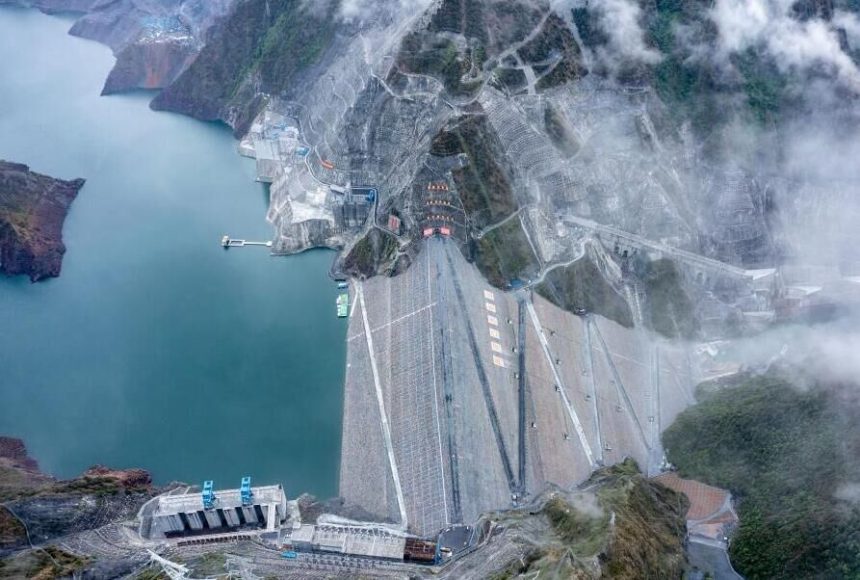
In a significant milestone for renewable energy, a mega hydro-photovoltaic (PV) complementary power station located in the Tibetan Autonomous Prefecture of Garze, Sichuan Province, commenced operations on Sunday. As the first phase of the Lianghekou hydropower plant’s hydro-PV complementary project, the Kela photovoltaic power station in Yajiang County now stands as the world’s largest and highest-altitude hydro-PV complementary power station.
Spanning an expansive area of approximately 1,667 hectares, the Kela photovoltaic power station boasts an impressive installed capacity of 1 million kilowatts. It is expected to generate an average of 2 billion kilowatt-hours annually, resulting in a reduction of over 1.6 million tonnes of carbon dioxide emissions per year.
The Lianghekou hydropower plant, situated on the Yalong River in Garze, has a planned total installed capacity of 3 million kilowatts. The successful operation of the Kela photovoltaic power station reinforces the Yalong River basin’s status as one of China’s primary clean energy bases.
This hydro-photovoltaic complementary project exemplifies the innovative integration of hydroelectric and photovoltaic power generation technologies. By combining the strengths of both renewable energy sources, the power station aims to optimize electricity production and contribute to a more sustainable energy landscape.
The commissioning of the Kela photovoltaic power station signifies a significant step forward in China’s ongoing efforts to transition towards cleaner and more environmentally friendly power generation. The project not only bolsters the country’s renewable energy capacity but also showcases China’s commitment to combating climate change by reducing carbon emissions.
As the world’s largest and highest-altitude hydro-PV complementary power station, the Kela photovoltaic power station serves as a shining example of technological innovation and sustainable energy development. Its successful operation marks a remarkable achievement in the pursuit of a greener and more sustainable future.