




By Chang Qin, People’s Daily
China had completed setting ecological conservation red lines nationwide, the Ministry of Natural Resources(MNR) announced during an activity held on the World Earth Dayrecently in Fuzhou, southeast China’s Fujian province.
The red lines cover areas that are ecologically vital and vulnerable and have important potential ecological value. These areas must be put under mandatory and rigorous protection.
China took the lead in proposing and implementing the red line system for ecological conservation.
The country has put no less than 3.15 million square km of its area, including no less than 3 million square km of land area, and no less than 150,000 square km of sea area, under the ecological conservation red lines.
It has formulated rules and implemented strict measures to strengthen monitoring and controlof areas covered by the red lines, achieving effective management and control of ecological redline areas.
“The ecological conservation red lines are the bottom lines and lifelines forsafeguarding national ecological security,” said Zhang Bing, an official with the MNR.
Feng Wenli, president of the China Land Surveying and PlanningInstitute, said China has made great progress in economic and social development since the launch of reform and opening-up, but ecological problems have become prominent bottlenecks hindering socio-economic development due to ecosystem degradation and the decline in capability for the supply of ecological products.
“Setting and strictly applying red lines for ecological conservation is a major strategic deployment made by China and an important institutional innovation in its ecological progress,” Feng said.
As the main department responsible for China’s ecological conservation, the MNR, together with departments including the Ministry of Ecology and Environment and the National Forestry and Grassland Administration, organized the assessment, adjustment, and demarcation of ecological conservation red lines and completed setting the lines for the first time according tothe national territorial space planning outline(2021-2035) and relevant plans at the provincial, municipal and county levels.
In Harbin city, northeast China’s Heilongjiang province, around 10,700 square km, or about 20 percent of its territorial area, is demarcated within the red lines, including major mountain ranges such as the Lesser Hinggan Mountains and the Zhangguangcai Mountains, as well as the mainstream and tributaries of the Songhua River, other rivers, lakes, wetlands and other areas, with the main aim of improving ecological functions including water and soil conservation, water source conservation and biodiversity preservation.
Jiamusi city in Heilongjiang puts over 12 percent of its territorial area under the protection of the red lines, including areas that are critical in environmental function, ecologically sensitive and vulnerable, as well as natural protected areas that include national parks, nature reserves and natural parks.
Southwest China’s Yunnan province has no less than 113,200 square km, or over 29 percent of its territorial area in the ecological conservation red lines.The province’s protected areas, excluding some areas of scenic areas there, are within the red lines, with 15 typical ecosystems including the tropical rainforest ecosystem being systematically protected. The red lines cover the habitats and migration channels of more than 90 percent of key state-protected plants and 80 percent of key state-protected animals in Yunnan, further improving the function of ecosystems.
Feng said the ecological conservation red lines mainly cover the ecological shield area of Qinghai-Tibet Plateau, key ecological areas along the Yellow River, key ecological areas along the Yangtze River, northeast forest belts, northern sand prevention belts, hilly areas in south China, and coastal areas. The red lines cover typical terrestrial ecosystem types including most of the natural forests, grasslands and wetlands, typical marine ecosystems such as mangroves, coral reefs and seagrass beds, as well as the vast majority of uninhabited islands.
No ratio targets of areas have been preset during the process of drawing the red lines. In some provincial-level regions, the ecological redline areas account for more than 50 percent of the regions’ territorial areas and in other provincial-level areas, that percentage is less than 10 percent, said Feng.
At present, provincial regions, including Zhejiang, Jiangxi, Shanghai, Shandong, Anhui and Sichuan, have rolled out detailed rules for the controls of the ecological conservation red lines. The rest of Chinese provincial regions are soliciting public opinion for similar rules or are about to introduce ones to strengthen the supervision of the red lines.
“To strictly enforce ecological conservation red lines, we need to improve long-term mechanisms,” Zhang said.
He added that the MNR will foster stronger collaboration between the ministry and local governments, regularly conduct conservation performance evaluations of the red lines, strengthen the capabilities for dynamic monitoring and early warning, accelerate the revision of relevant laws and regulations and increase publicity, so as to build a modern China where humanity and nature exist in harmony.
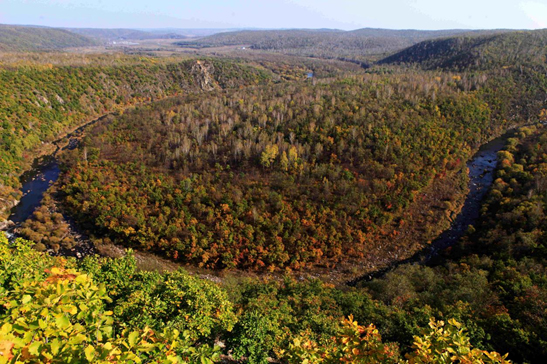
Photo shows a picturesque view of the Jinhe Grand Canyon located in the Lesser Hinggan Mountains in Heihe city, northeast China’s Heilongjiang province. (Photo by Wei Jianshun/People’s Daily Online)
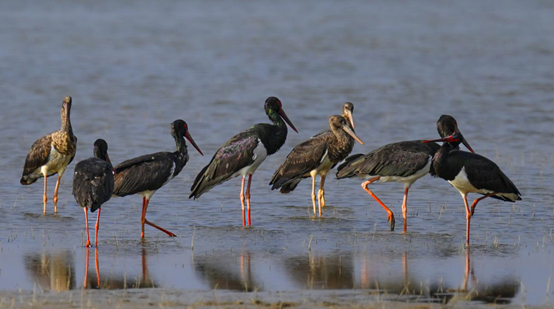
Photo shows black storks, a rare bird species, in Mengzi city, Honghe Hani and Yi autonomous prefecture, southwest China’s Yunnan province, Feb. 18, 2023. (Photo by Lu Zhong/People’s Daily Online)
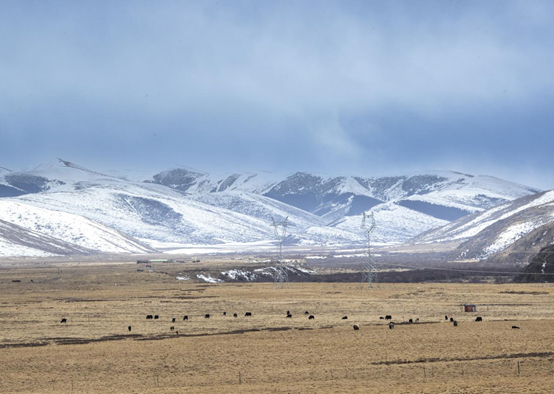
Photo shows a picturesque view in a national park in Hongyuan county, southwest China’s Sichuan province. (Photo by Liu Guoxing/People’s Daily Online)